All Our Stories – Film Premier of “Parkinson’s Park – A New Chapter”

David Myers, filming on location in 2012

David Myers, filming on location in 2012

Between the start of the Park’s regeneration in November 2011, and the Queen’s Diamond Jubilee in June 2012,  David Myers, local filmmaker and ex Crompton Parkinson employee, filmed the revival of the Park and its place in the social life of the area.  This was the sequel, to his tear jerker production which showed the demise of the factory in 2005.

In driving rain, or dazzling shine,  brass-monkey cold or the occasional spot of golden light, wind and noisy airplanes,  David was out shooting frames of the changes that were being made.  The result is an hour length film,  recording many local people, helpers and events in the Park.    It features the felling of the great sycamore, and a dawn chorus in May; the careful craftwork of the Peter the hedge layer, and the splendid sword of the Queen’s representative;  together with Continue reading

Invitation to the Annual General Meeting, 23rd April 2013

We warmly invite Friends of Parkinson’s Park to the FOPP AGM on 23rd April 2013,  in the Fellowship Room of the Methodist Church, Oxford Road, Guiseley.  7 – 9pm.

7 – 7.45pm – Reports on 2012/2013; election of Management Committee officers for 2013/2014; discussion on whether a subscription is required for the coming year; and suggestions and discussion of the work plan for 2013/2014.  This is for all Friends of Parkinson’s Park.
7.45 – 8pm – Tea
8 – 9pm – David Myers will be showing his excellent film “Parkinson’s Park, A New Chapter”, about the first year of Parkinson’s Park’s regeneration; which features a variety of people, tasks and events.  This is open to anyone who would like to attend. Continue reading

Sun Brings Out “Friends” Working Party

Yesterday was a very successful and sunny spring morning with a variety of “jobs” being completed by a good turnout of “friends”.
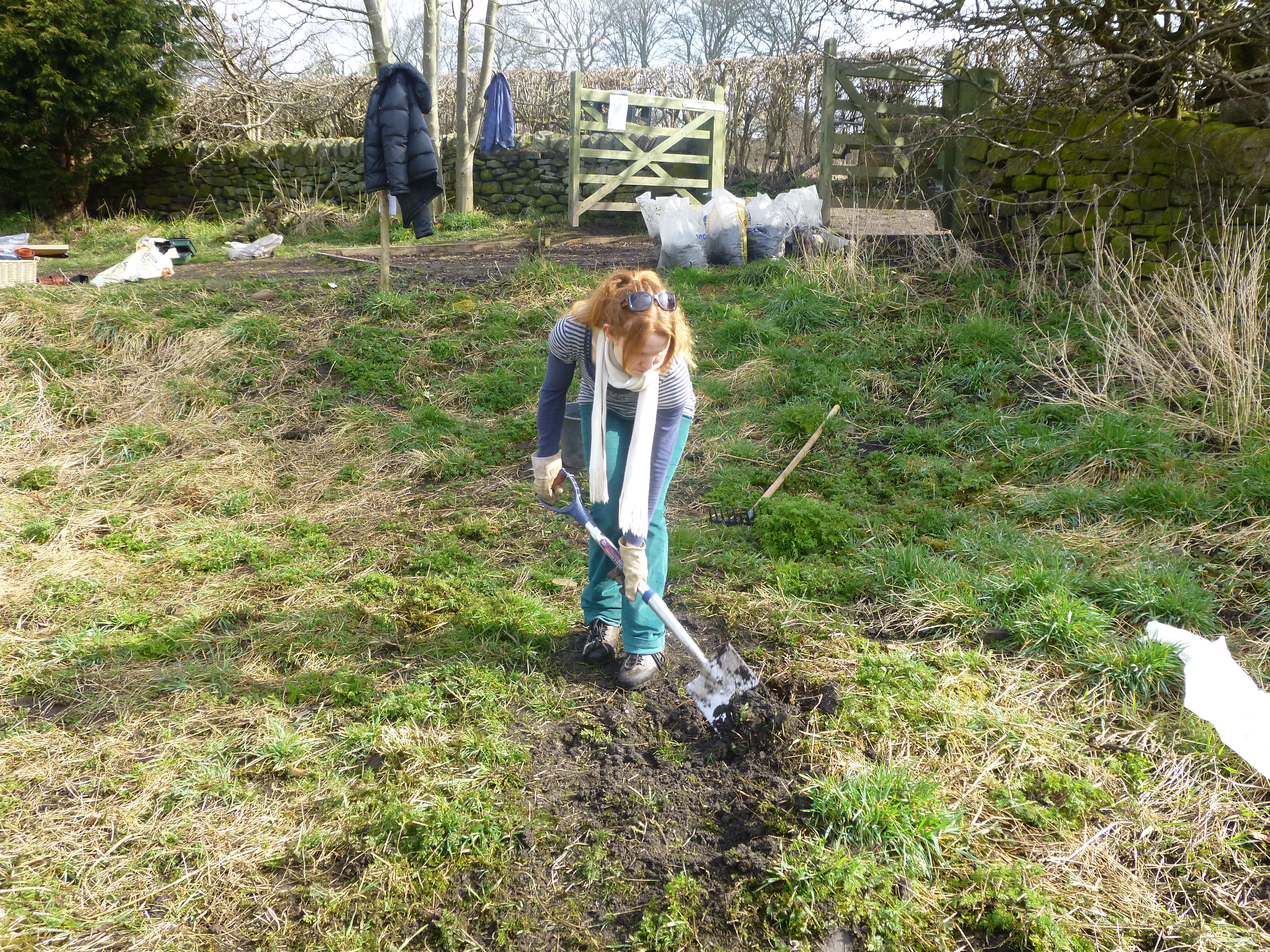
Josie and Chris cleared an area by the farmgate entrance to make into a new wildflower area. Many thanks to Gordon and Betty Yates for donating two wildflower “mats” and to Tony Russell Gardening for donating 12 bags of soil and compost.

P1010444                                              P1010440

Josie and Chris also added more soil to the raised beds being developed in the same area under the RHS “Edible Britain” scheme. Chris gave out free seeds given by the RHS to a number of local folk out in the park enjoying the sunshine. Continue reading

All Our Stories – Piecing the Evidence Together

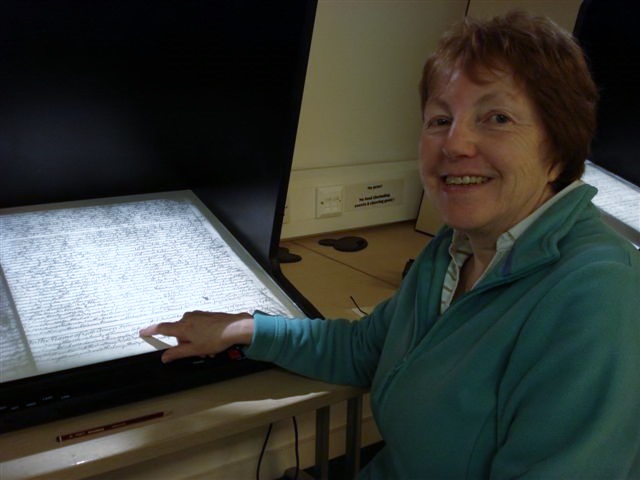
Barbara Winfield reading Matthew Craven's will at the Borthwick Institute

Barbara Winfield reading Matthew Craven’s will at the Borthwick Institute

Local history is like a detective game:by itself a scrap of information seems worthless,  but, when put together with a pile of other scraps, slowly, if you are luck,  a picture will begin to emerge.

Following a trawl around local archive indexes,  Barbara Winfield has done a fantastic job locating a number of scraps of information – newspaper cuttings, wills, and deeds – about Kelcliffe and its owners.  To date she has visited Wakefield Registry of Deeds, West Yorkshire Archives at Calderdale, and the Borthwick Institute at York University.

So, one evening, just before Easter, as snow lay deep on the ground in early spring, we sat down to see what we could make of the scraps.  A key piece of work was to try to work out how the field names have changes over the centuries.  This was done  by a process of Continue reading

All Our Stories – Butterflies and Little Beasties by Josie Brooks

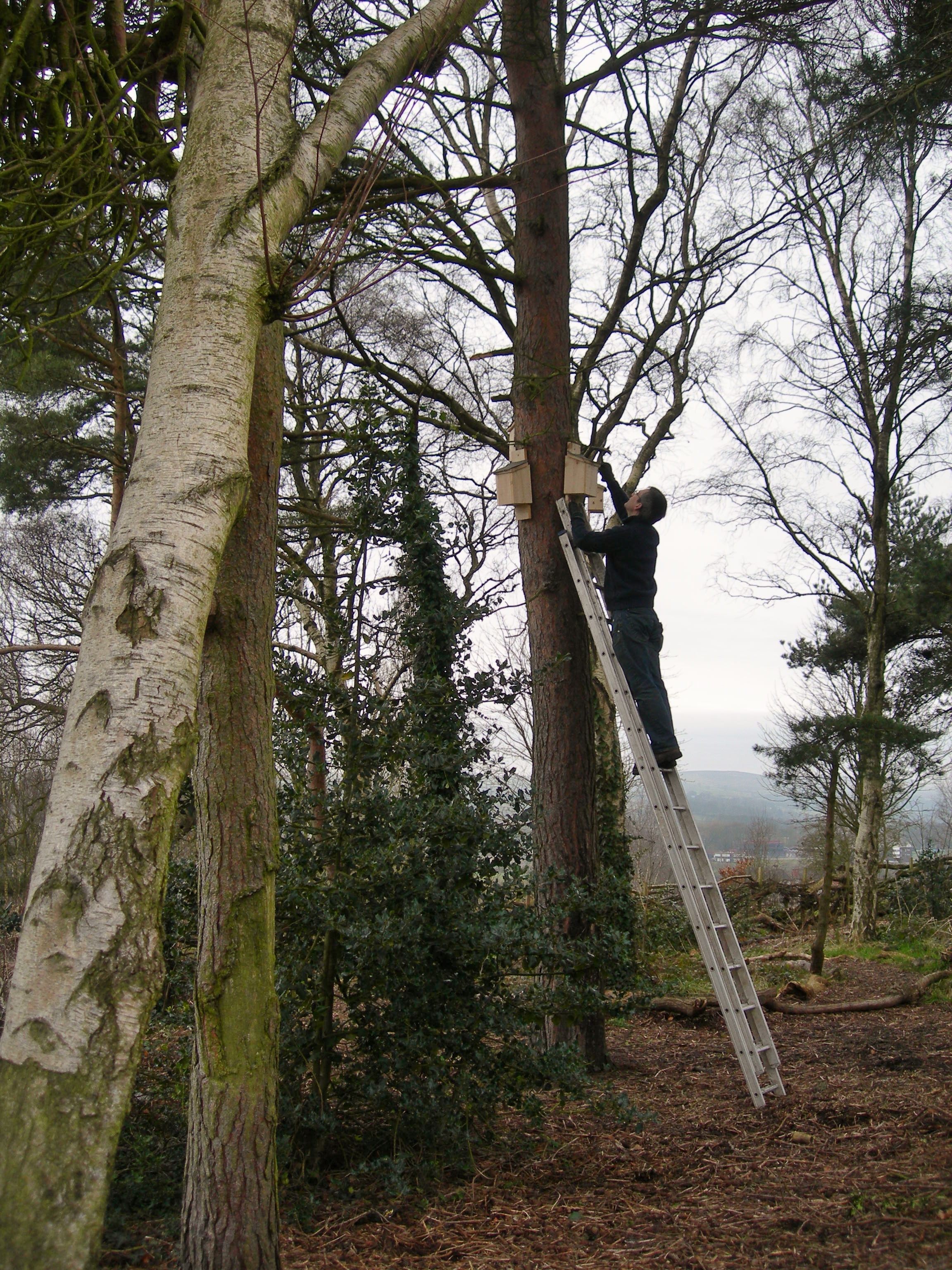
Andy, (and Darren) installing the new bird and bat boxes.  We will do surveys later in the year to see what they attract.

Andy, (and Darren) installing the new bird and bat boxes. We will do surveys later in the year to see what they attract.

Besides the geology and history of the park, the All Our Stories project wants to tell the ecological story of the land, as it goes hand in hand with the other two subjects.  Over the past few years two general ecological survey’s have been done – firstly by Bellway in March 2005, and then by the Wharfedale Naturalists in October 2011.

We have therefore started the AOS ecological project by putting together what has already been found out and then deciding what further survey work needs to be done to improve our knowledge of the Park’s development.

Both the previous studies point out the different conditions caused by the underlying geology – the lower slopes are much wetter than the top, particularly to the north west, where plant types indicated standing water and impeded drainage.  The land to the north of the park is an area of acid grassland, and the land to the south is semi-improved neutral grassland. Continue reading