All Our Stories – Piecing the Evidence Together

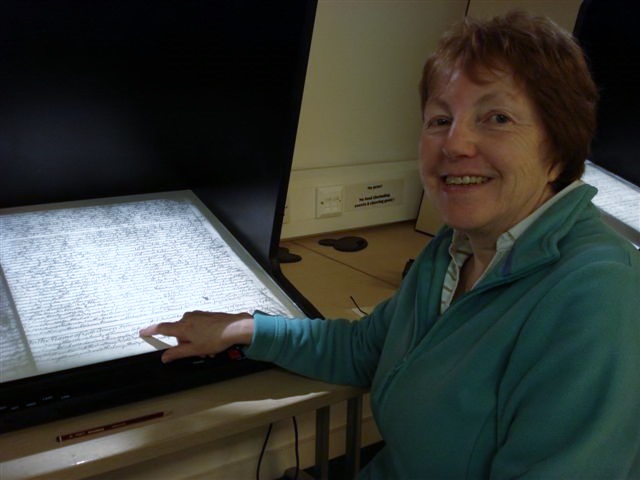
Barbara Winfield reading Matthew Craven's will at the Borthwick Institute

Barbara Winfield reading Matthew Craven’s will at the Borthwick Institute

Local history is like a detective game:by itself a scrap of information seems worthless,  but, when put together with a pile of other scraps, slowly, if you are luck,  a picture will begin to emerge.

Following a trawl around local archive indexes,  Barbara Winfield has done a fantastic job locating a number of scraps of information – newspaper cuttings, wills, and deeds – about Kelcliffe and its owners.  To date she has visited Wakefield Registry of Deeds, West Yorkshire Archives at Calderdale, and the Borthwick Institute at York University.

So, one evening, just before Easter, as snow lay deep on the ground in early spring, we sat down to see what we could make of the scraps.  A key piece of work was to try to work out how the field names have changes over the centuries.  This was done  by a process of Continue reading
All Our Stories – Butterflies and Little Beasties by Josie Brooks

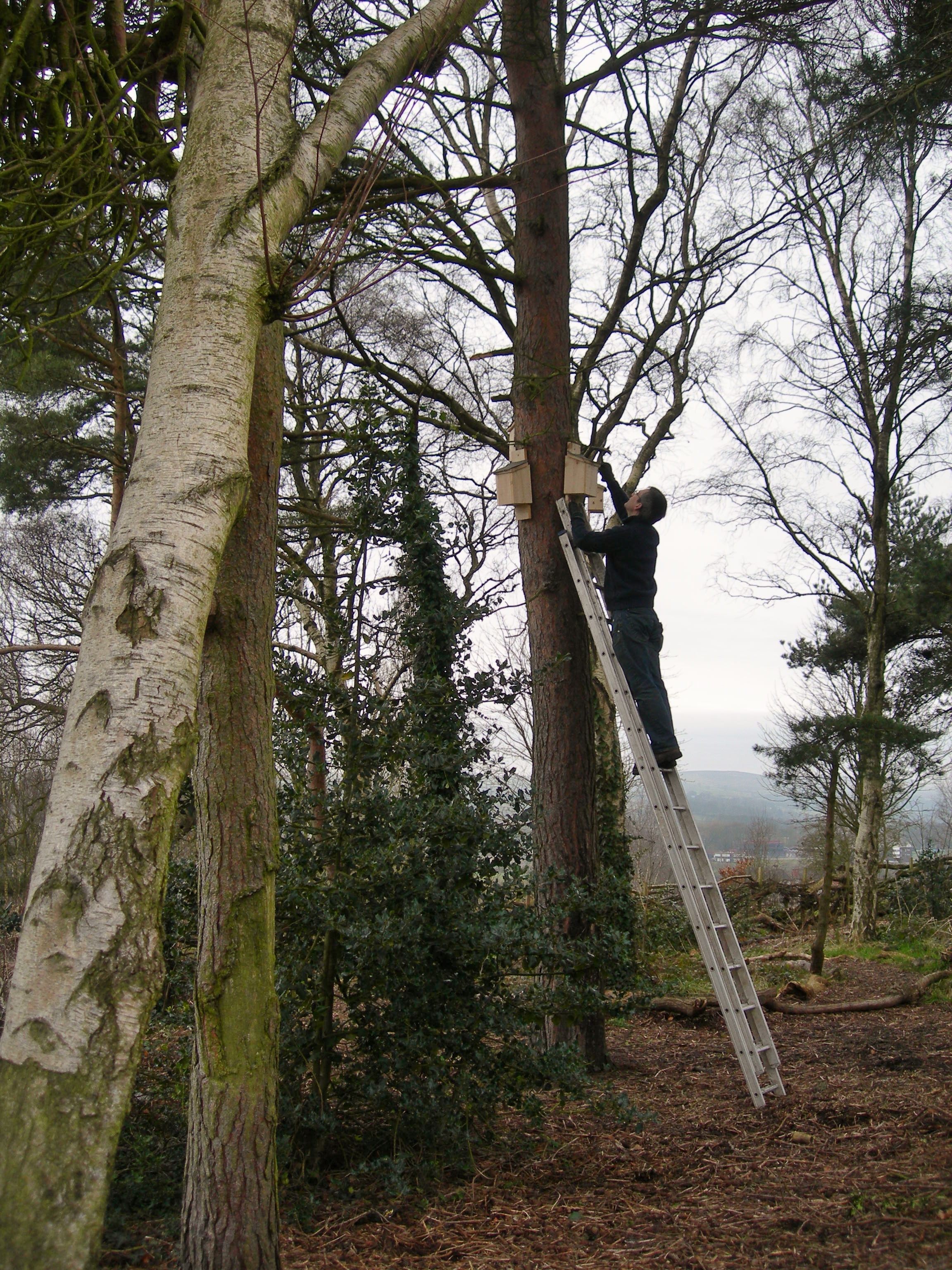
Andy, (and Darren) installing the new bird and bat boxes.  We will do surveys later in the year to see what they attract.

Andy, (and Darren) installing the new bird and bat boxes. We will do surveys later in the year to see what they attract.

Besides the geology and history of the park, the All Our Stories project wants to tell the ecological story of the land, as it goes hand in hand with the other two subjects.  Over the past few years two general ecological survey’s have been done – firstly by Bellway in March 2005, and then by the Wharfedale Naturalists in October 2011.

We have therefore started the AOS ecological project by putting together what has already been found out and then deciding what further survey work needs to be done to improve our knowledge of the Park’s development.

Both the previous studies point out the different conditions caused by the underlying geology – the lower slopes are much wetter than the top, particularly to the north west, where plant types indicated standing water and impeded drainage.  The land to the north of the park is an area of acid grassland, and the land to the south is semi-improved neutral grassland. Continue reading

All Our Stories – The Spirit of An Old Tannery at Kelcliffe

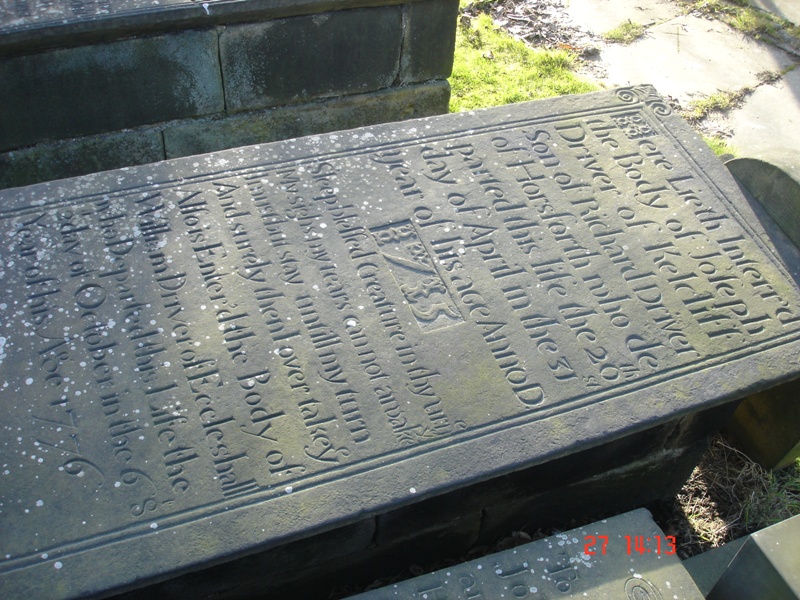
Driver's Gravestone, Guiseley Churchyard.  Source; W Sutherland, findagrave.com

Driver’s Gravestone, Guiseley Churchyard. Source; W Sutherland, findagrave.com

It started with a newspaper cutting from the Leeds Intelligencer,  24 October 1780, found by local historian, Barbara Winfield just after Christmas 2012, on the British Library Digitised Newspaper Archive website – the first indication that Kelcliffe might have originally been a tannery for the local area.  Remembering that Guiseley would have been a good walk down Kelcliffe Lane to Town Gate at that time: and, that tanneries were sited away from villages because of the dreadful smell.

An advertisement in the paper said that on the 16th November 1780 a freehold messuage (dwelling, and barns) at Kelcliffe, with tan house, tan yard, and drying houses, with 45 Continue reading

All Our Stories – Parkinson’s Park Was Once A Large River Delta

David Leather, examining the tidal lamination in Fairy Dell

David Leather, examining the tidal lamination in Fairy Dell

As part of the Geology project Mr David Leather MSc, a local geology expert, member of Yorkshire Geological Society and author of guide books  on the Yorkshire Dales came to survey the Park in February –  recommended by the Wharfedale Naturalists.  David is doing a full report on his findings,  and making recommendations for how FOPP can capture the information so as to share the ancient story of the Park’s formation.

One of the first remarks of this retired geography teacher from Salts’ Grammar, as he stood looking out over the valley towards Wharfedale, was that the terrain was unusual, and not a typical ‘text book’ glacial landscape.

Looking at his maps,  the Park itself sits on and area of interlocking millstone and Guiseley grit layers that make up the Chevin.  These were laid down many millions of years ago, when the Park was part of a big river delta.  In the nearby quarry at Fairy Dell, there are signs of ‘tidal lamination’ – fine layers of rock laid down by tidal action, that David was Continue reading

All Our Stories – Projects to Get Involved With

HLFFollowing our success with receiving an Heritage Lottery Fund,  All Our Stories Grant (there were over 1,000 applications and 542 were successful),  we now have four research projects running to look at the history of the Park site, and its connection to local people and their lives.   If you would like to join in the research for any of these projects please email us on parkinsonspark@gmail.com.

The development of the research and the project will be recorded on the Parkinson’s Park blog, and will be kept by the Heritage Lottery Fund as a digital record for the future.

Geology – Telling the story of the geological formation of the Park’s surroundings in an information board.

Ecology – Telling the story of certain aspects of the Park’s current ecology.

Archaeology – Looking into the Park’s past and what the land may have been used for and how this linked to the local economy and society.

Cultural History – What do records tell us of the Park’s use by local people, both pre and post 1937.   Barbara Winfield is particularly looking for stories of the use of the Park after Frank and Albert Parkinson developed it.

Other organizations receiving All Our Stories grants range from 100 years of Cambridge United Football Club, to an exploration of the development and demise of Nottingham Tower Block living, and why the Chinese community developed in Swansea.  We feel very luck to have been awarded a grant, and are keen to involve everyone who would like to make a contribution to The Great British Story.

Parkinson’s Park Now ‘Officially’ Part of The Great British Story


We are thrilled to hear that Parkinson’s Park has been successful in our application for a Heritage Lottery Fund ‘All Our Stories’ grant to explore the history – geological, cultural and ecological – of Parkinson’s Park. A key feature of receiving the grant is the involvement of local people in the research – the output will include, information boards, leaflets, schools materials, and maybe even a film,  to help local people pass on and understand the area’s heritage. Continue reading