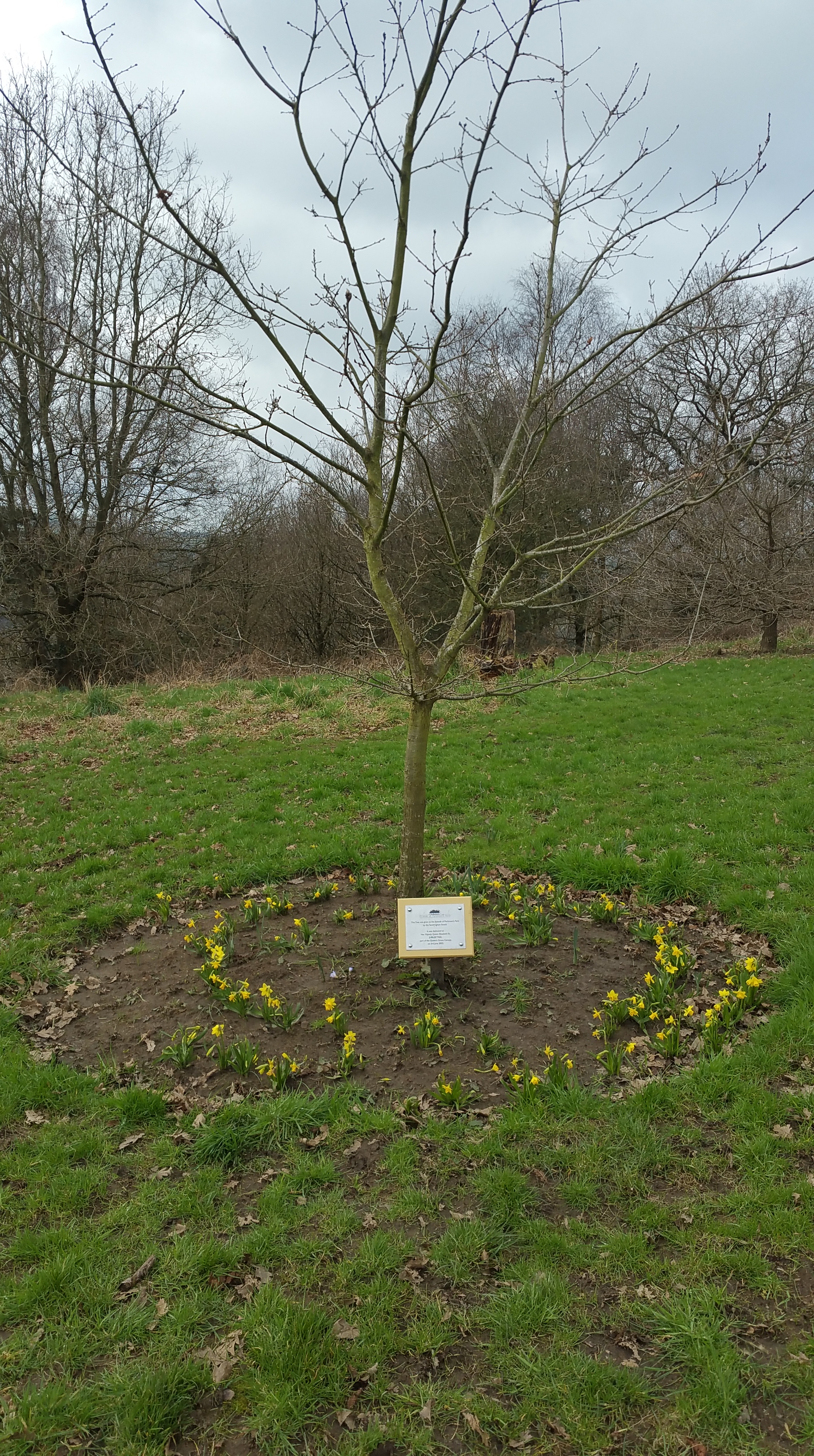
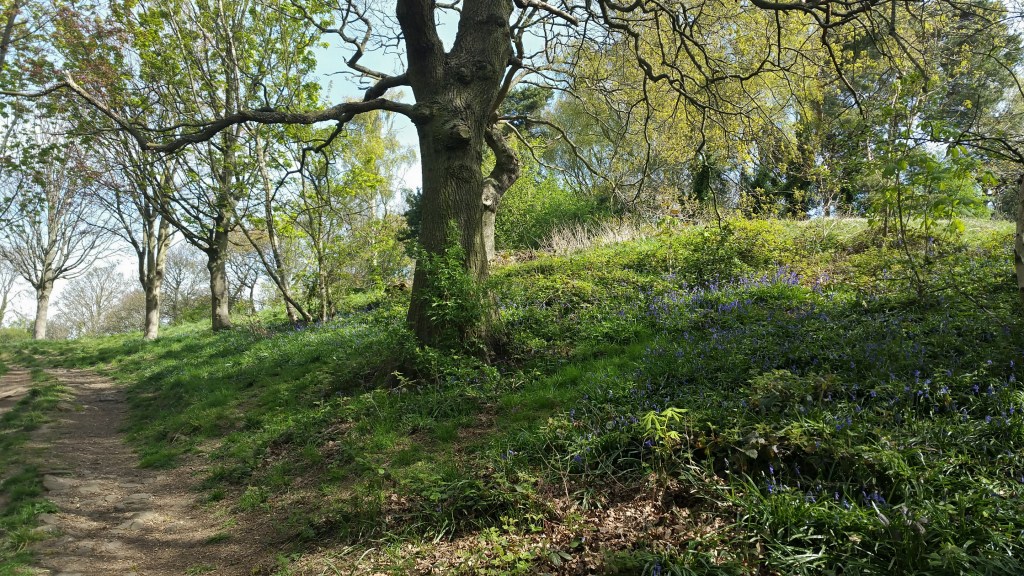
In contrast to our last post on drug users, the local Explorer Group started doing small projects in the Park last summer. One of the projects was to create a tree pit around the Jubilee Oak, which they then planted with bulbs last Autumn – their hard work has now come to fruition.
The Explores will be back this year after Easter. We look forward to working with them again in 2024.
The Queen’s Jubilee Plaque that was stolen last Christmas has now been refurbished and returned to its place under the Jubilee Tree which is part of the Queen’s Green Canopy. We’d like to thank everyone who helped in it’s return and repair.
We’d also like to thank Phil Todd, Gavin Birkett and the Honey Badgers Explorer Scout Unit (ESU) for creating a tree pit around the Jubilee Tree in July. And also to Phil Todd and Roger Garnett for putting the plaque back in place. Fingers cross there are no more Jubilee Tree happenings !
New Bug Hotel
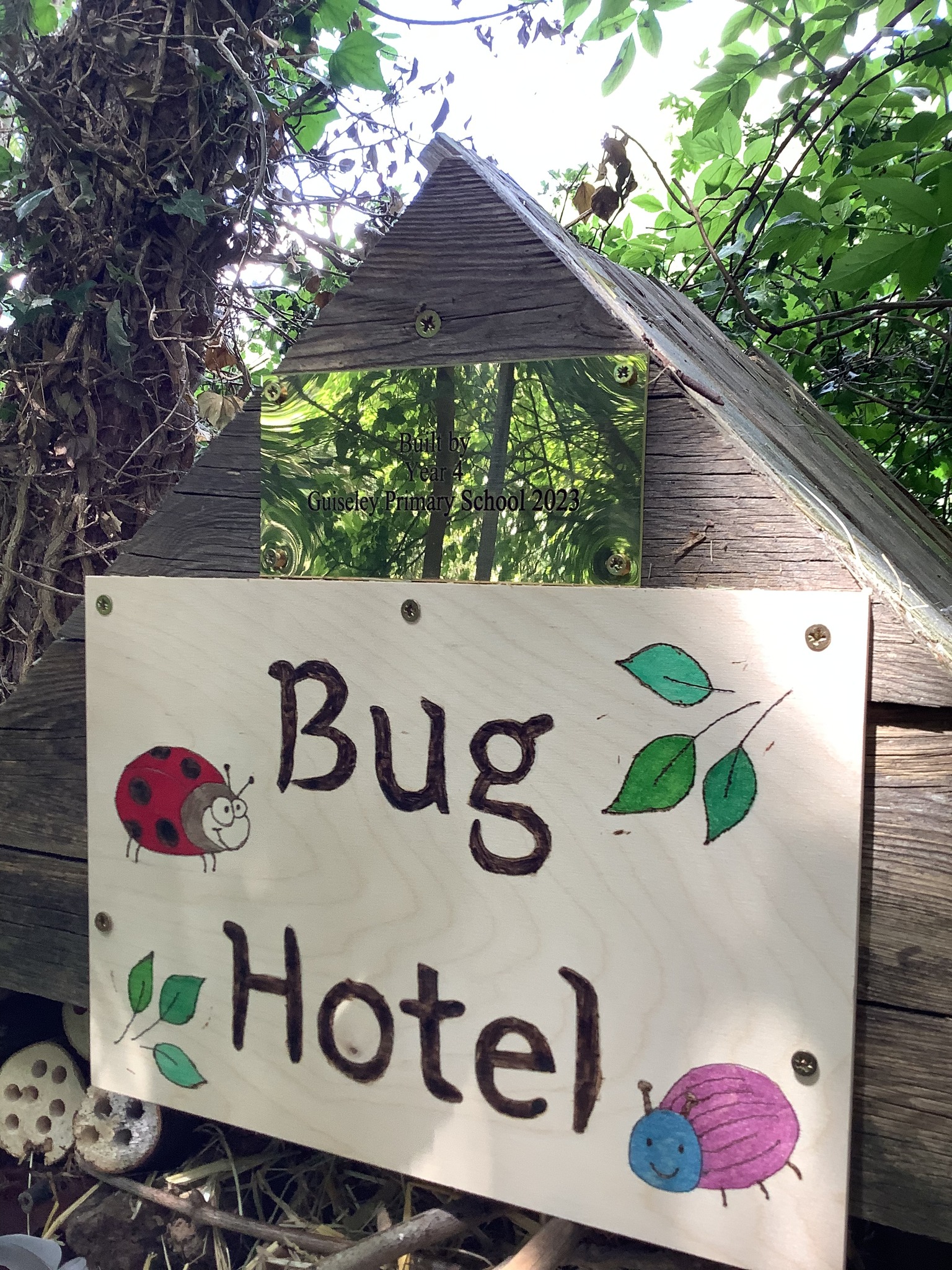
Another casualty of vandalism was the old bug hotel, which had been made by the local cubs. However, we are very pleased that Year 4 from Guiseley Primary School helped us create a lovely new one in July. The hotel is in the top copse which was cleared and tidied. Then it was built using waste wood and pallets, the children then filled it with a variety of bricks, pipes, wood and cones – donated and collected by various people.
Atop the new hotel is a shiny new name plate. We hope the bugs enjoy using it
Children’s Gala 2023
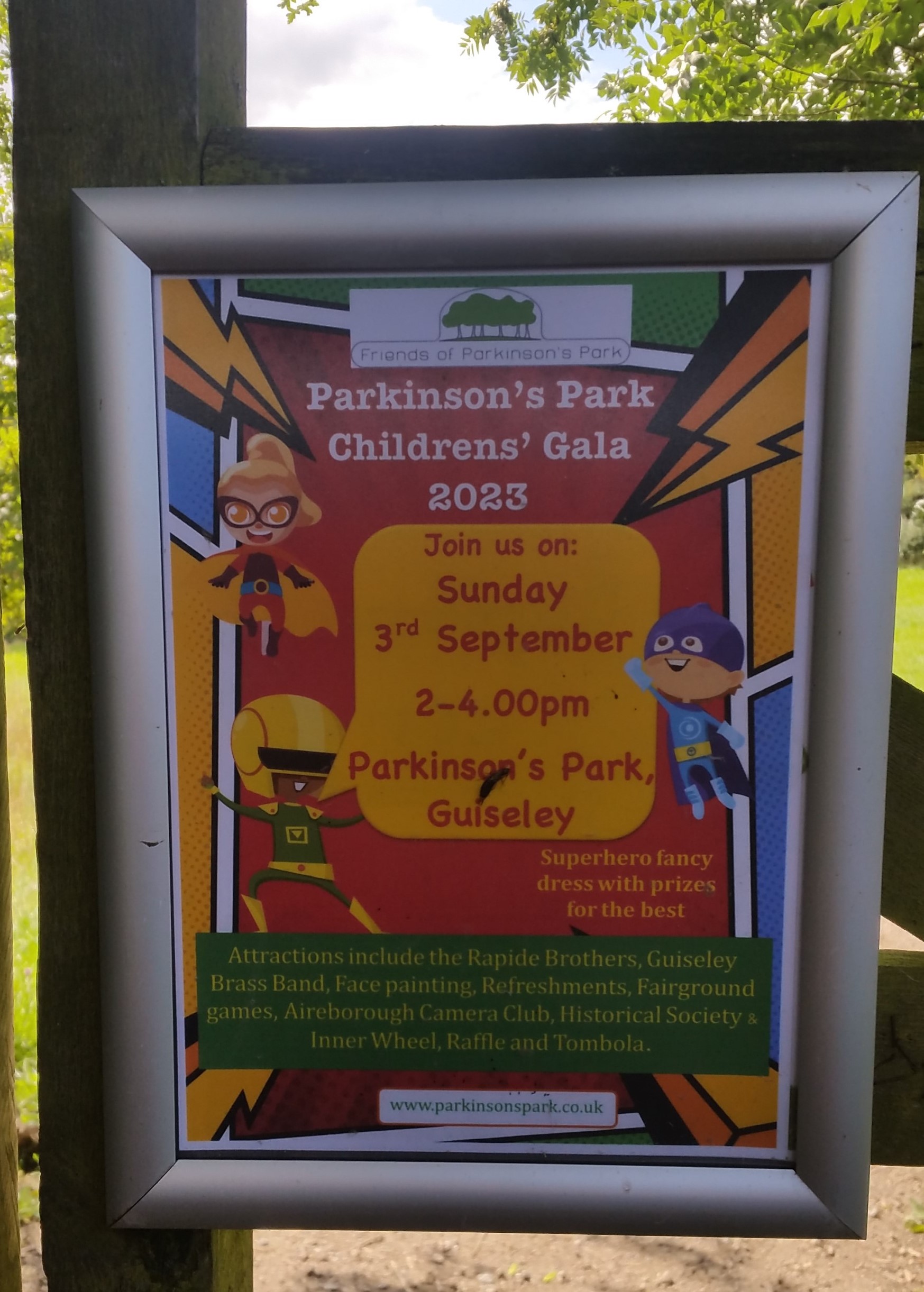
We are pleased to announce this year’s Children’s Gala on 3rd September, the theme is Superheroes.
Heritage Open Day
FoPP will be taking part in Heritage Open Days this year with a talk and film on the social life of Crompton Prakinson’s on 8th September, 2pm in St Oswald’s Church, where there will also be a display of Crompton’s memorabilia. Details here.
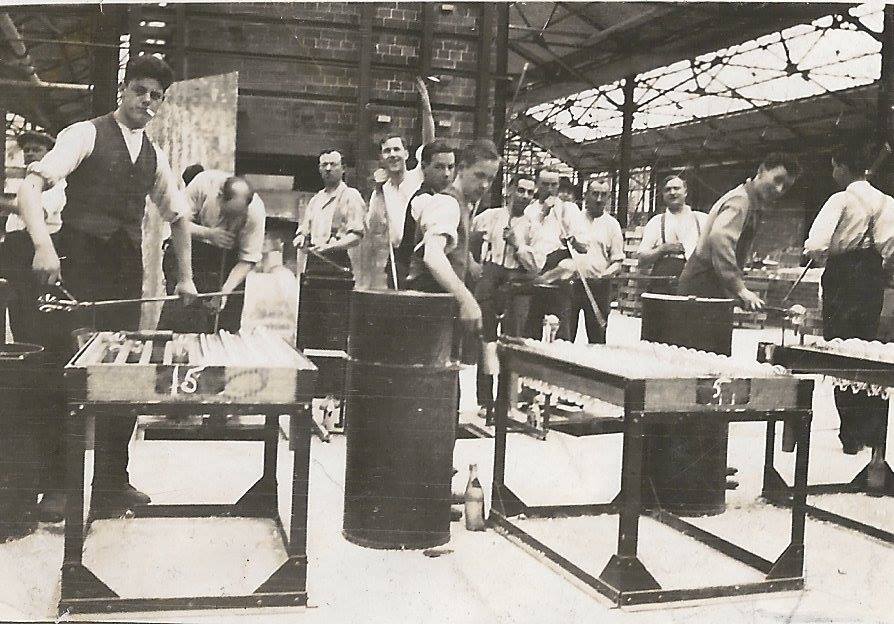
Frank Parkinson, known as Britain’s shyest millionaire in the 1930’s, together with brother Albert, ran a family business in Guiseley that was also a highly renown international company. Their staff were at the heart of this successful company, and the brothers ensured that there was a full programme of social activities.
The event involves an introduction to the Parkinson brothers and their legacy by Jennifer Kirkby of Friends of Parkinson’s Park, followed by a film made by ex Crompton employee David Myers, ‘MEMORIES OF SOCIAL ACTIVITIES AT CROMPTON PARKINSON’S GUISELEY FACTORY‘ as remembered by staff. It features the Children’s Gala, Horticultural Show, Annual Events and the legacy of the Parkinson brothers which continues into 2023.
St Oswald’s will also be running an open day on 9th September. Details here.
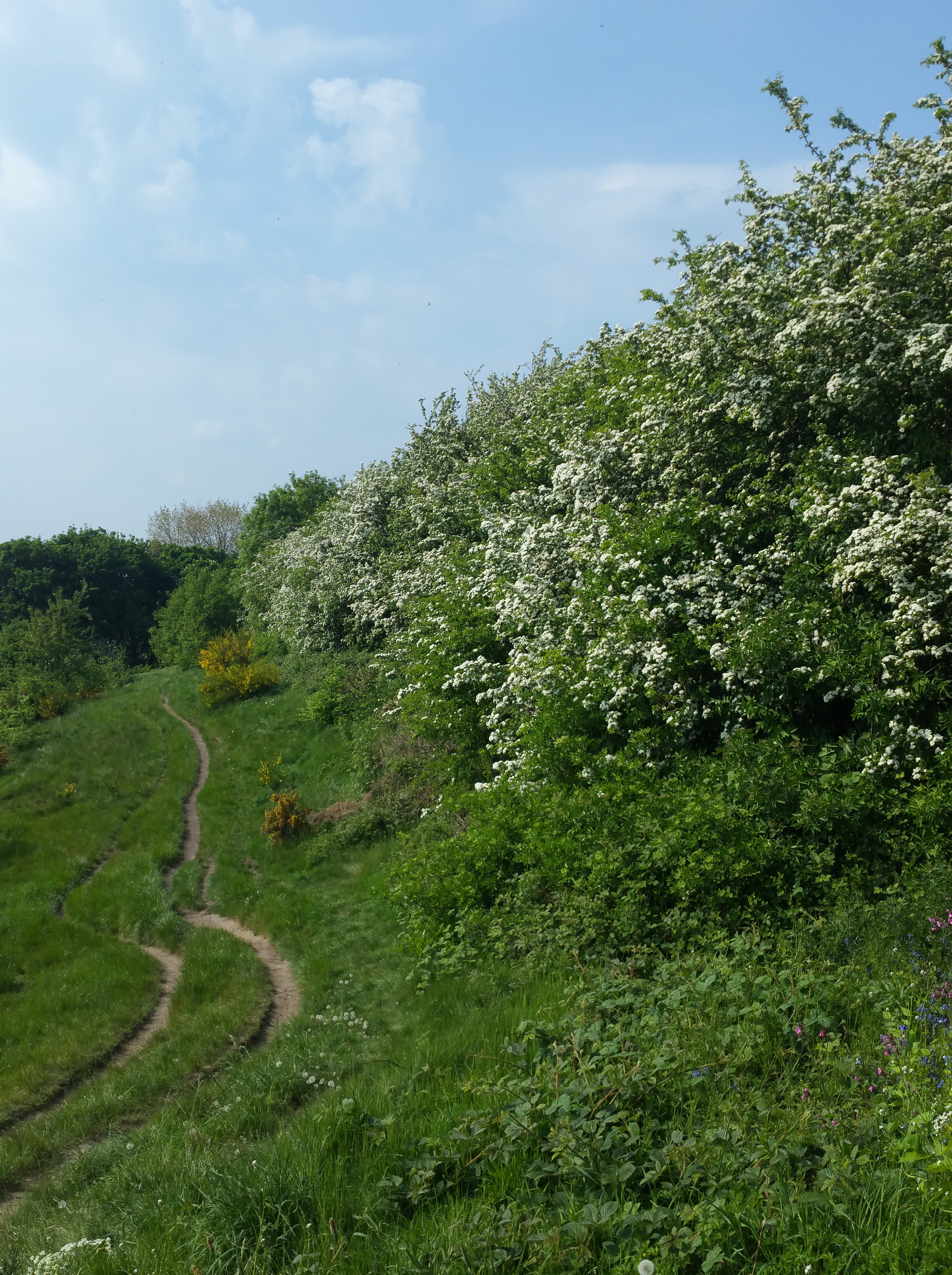
Hedgerows are an important habitat for both plants and wildlife. Here in the Yorkshire South Pennines we tend to have dry stone walls (also an important habitat but for different wildlife), but there are hedges too; many originally planted as ‘quick hedges’.
The Park has several hedges, the big one along Kelcliffe Lane, planted in the early 20th century from hawthorn: it now has a mix of species, including some cyclamen in Autumn. FoPP has added to the species mix via the Jubilee and Queens Green canopy projects.
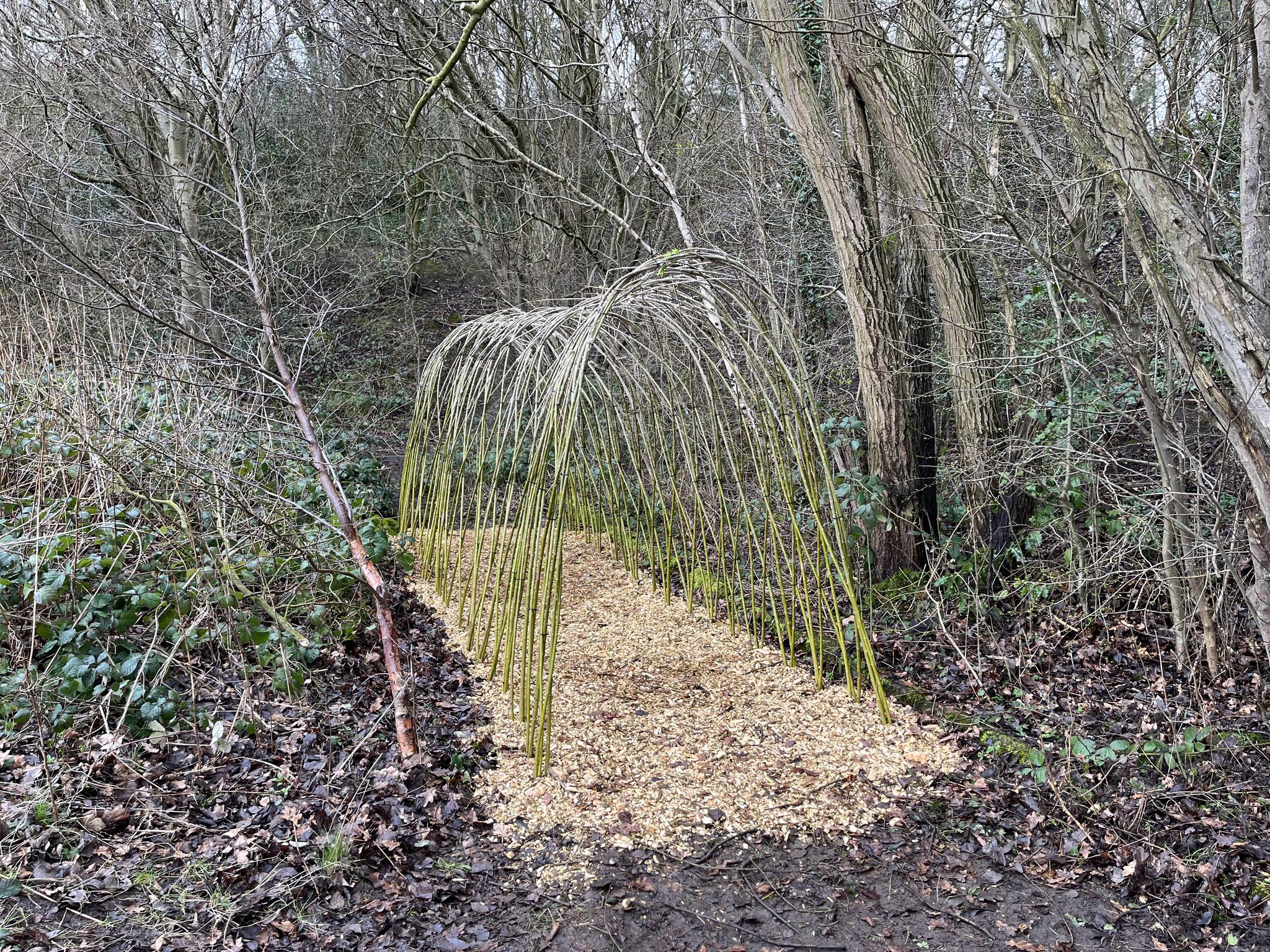
The bottom of the Park is fairly wet, and there is a lot of willow growing there. A few years ago FOPP decided to make use of this and create a Willow Walk. Money was raised from the Co-Op Community Fund throughout 2021/22 and yesterday (16 March 2023) the first part of the Walk was put in place – a willow tunnel to form the entrance.
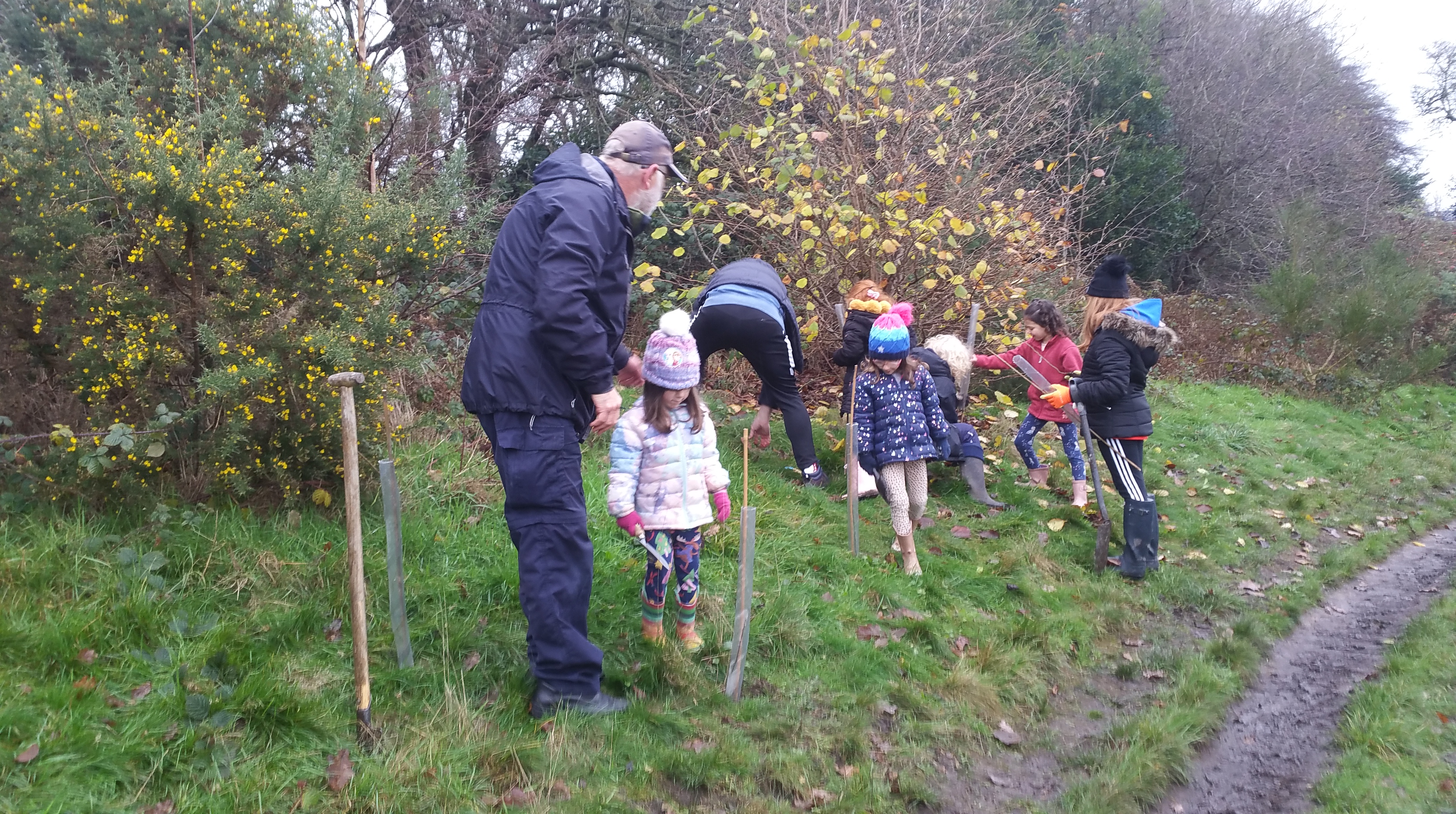
Rainbows, Brownies and Guides planted a bank of fruit bearing trees for the Queen’s Green Canopy along Jubilee Walk in Parkinson’s Park on Sunday 4th December 2022.
Planting The Queen’s Green Canopy on Jubilee Walk
The late Queen Elizabeth decided that her legacy for her Platinum Jubilee would be a nurturing Green Canopy of native trees for the United Kingdom. The Woodland Trust, as a partner in this scheme, has been donating packs of whips to local groups to plant and register as part of the canopy so that as many people as possible could take part in building this legacy for the future. (This is now extended to March 2023.)
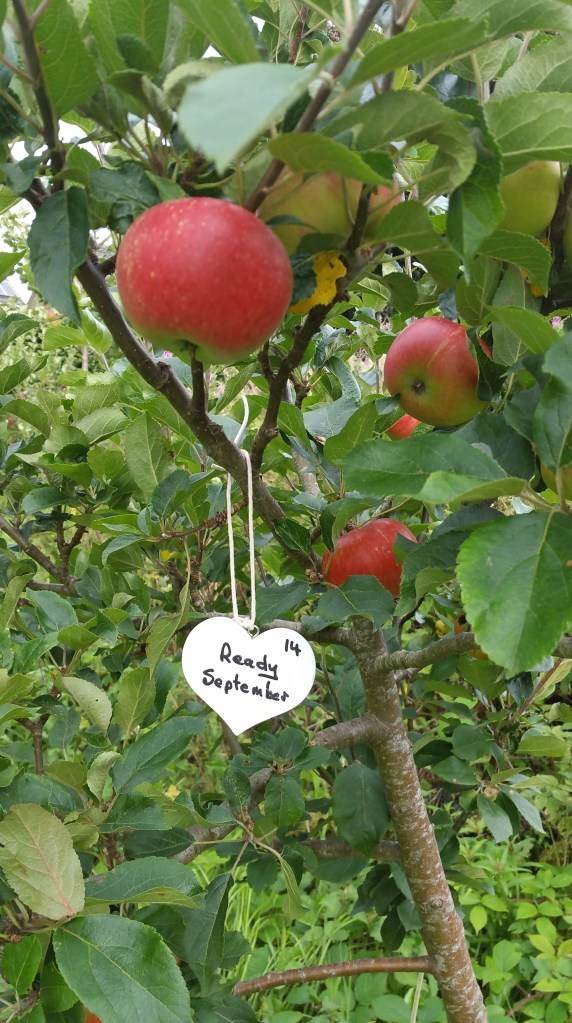
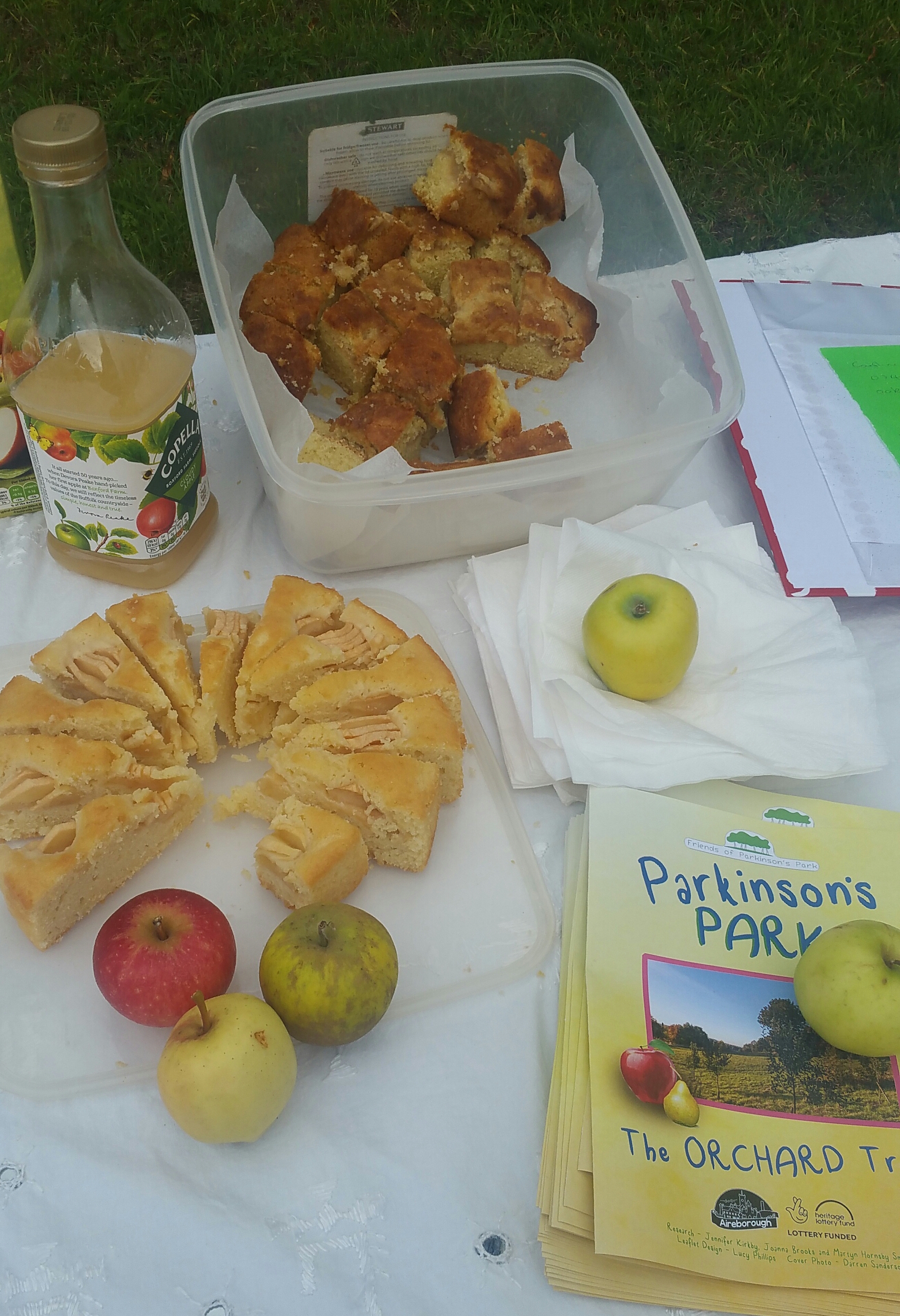
The apples in the Orchard are ripening, but they are not ready to pick yet. In previous years we’ve had people picking them far to early and then throwing them away – which is such a shame. So, this year we’ve tied a label on each tree with apples with the rough time when they should be ready to harvest. Some will be ready in September, others not until November, for most in will be October.
You can tell when an apple is ready to pick when when you cup it in your hand and give it a slight twist, and it comes off in your hand. If you need to give the fruit a yank, or it leaves its stalk behind, or even a bunch of leaves, it is definitely not ready!
You can also tell from our apple guide – each tree is labelled with its name, and there is a note in the guide to the time when it should be ready. You can download the guide here. It will also tell you if it is a desert or cooking apple or both.
The Orchard Trail
Unfortunately, it has been a poor year for pears, and there are none. But the two plums have fruit, which will be ready, hopefully, during September.
Our thanks go to student Lily Davies who has spent the Winter and Spring doing her Craven College, Land and Wildlife Management, work placement in the Park supervised by Chris Parapia and Joanna Brooks. Lily has helped plant the Greenshaw Wood, the herb planter, winter pruning in the orchard, the Parkisons Python, and the Easter Trail. We’ve all been impressed with her hard work, and enthusiasm.
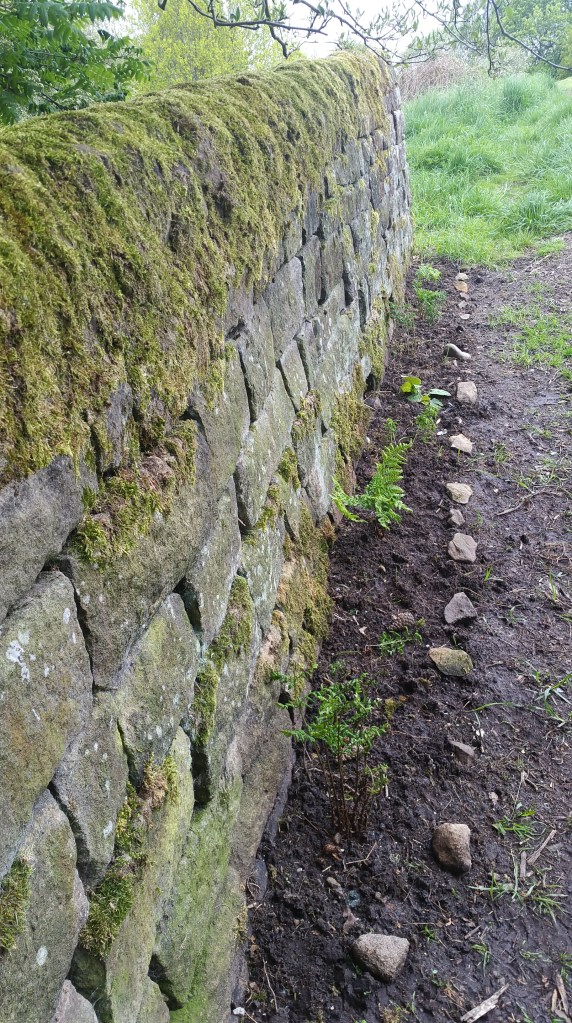
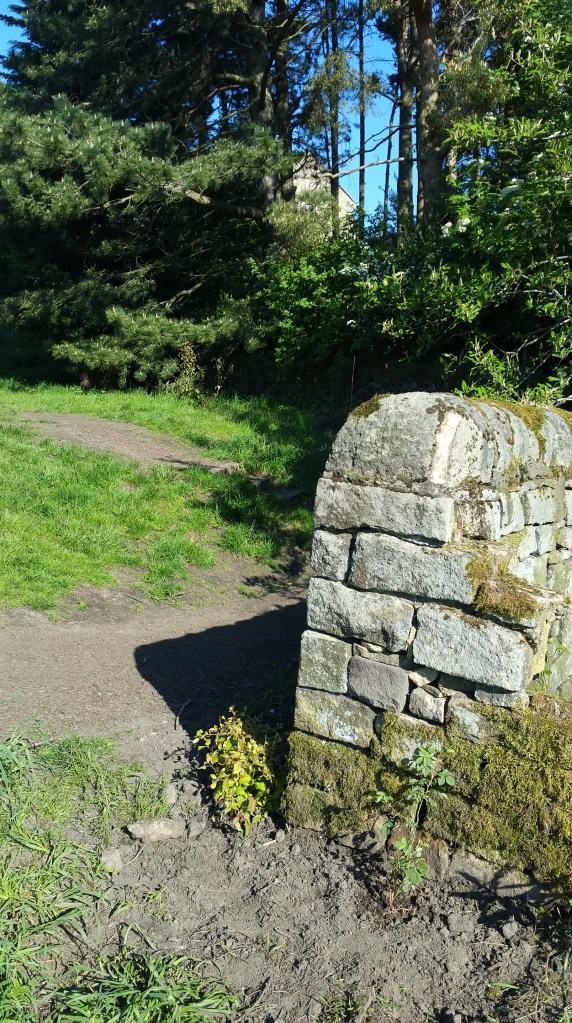
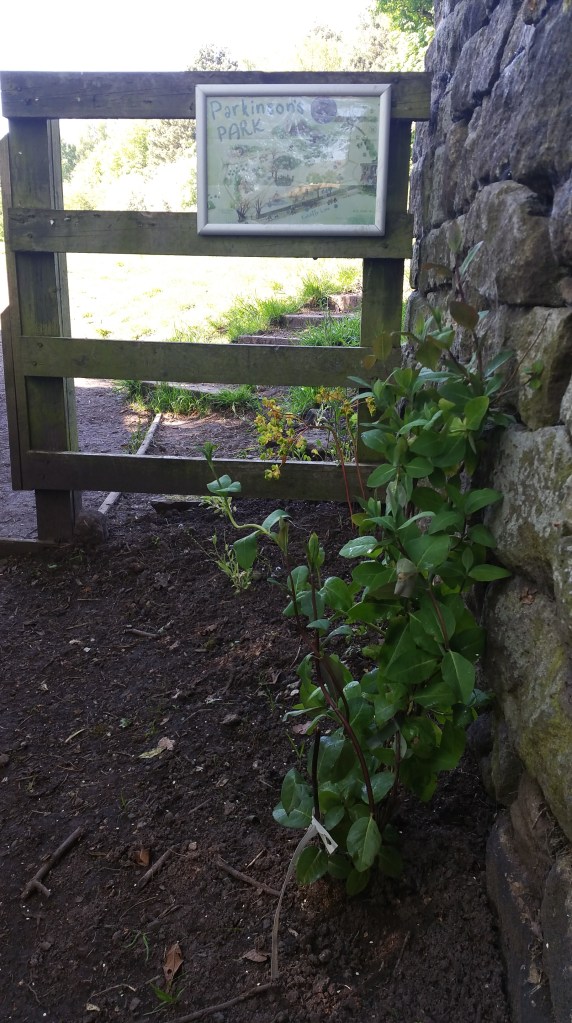
For her main project we asked her to improve the Greenshaw Gate entrance with a suitable planting scheme and are pleased she was just able to complete that before the end of her time with us. (Labour and advice were provided by Martyn Hornsby-Smith and Jennifer Kirkby.)
The gate is on the edge of woodland, and is in shade for a lot of time, so it was ideal for a woodland planting scheme of ferns, foxgloves, bulbs and woodland edge shrubs. Our aim is to improve all entrances into the Park over time, and there are different groups of people who look after each entrance. If you would like to take on Lily’s work and look after the Greenshaw Gate email us at parkinsonspark@gmail.com.
Our thanks also to Bettys Harrogate who provided the woodland plants for this and other entrance gates through their Trees For Life Fund. Bettys and Taylors of Harrogate donated over £3,300 to disability charity Open Country, to pay for nine days of their time on conservation work at parks and nature reserves across Lower Wharfedale as well as the purchase of plants and saplings to create new habitats for nature. An article from the Wharfedale explains more:-
The colder weather recently has meant many plants are flowering a few weeks late. Still, there is a lot to see, and a lot of promise budding up for the weeks to come.
Besides the delightful English bluebells, and the blossom on the apple, pear and crabapple trees, here are some of the other highlights to look out for.
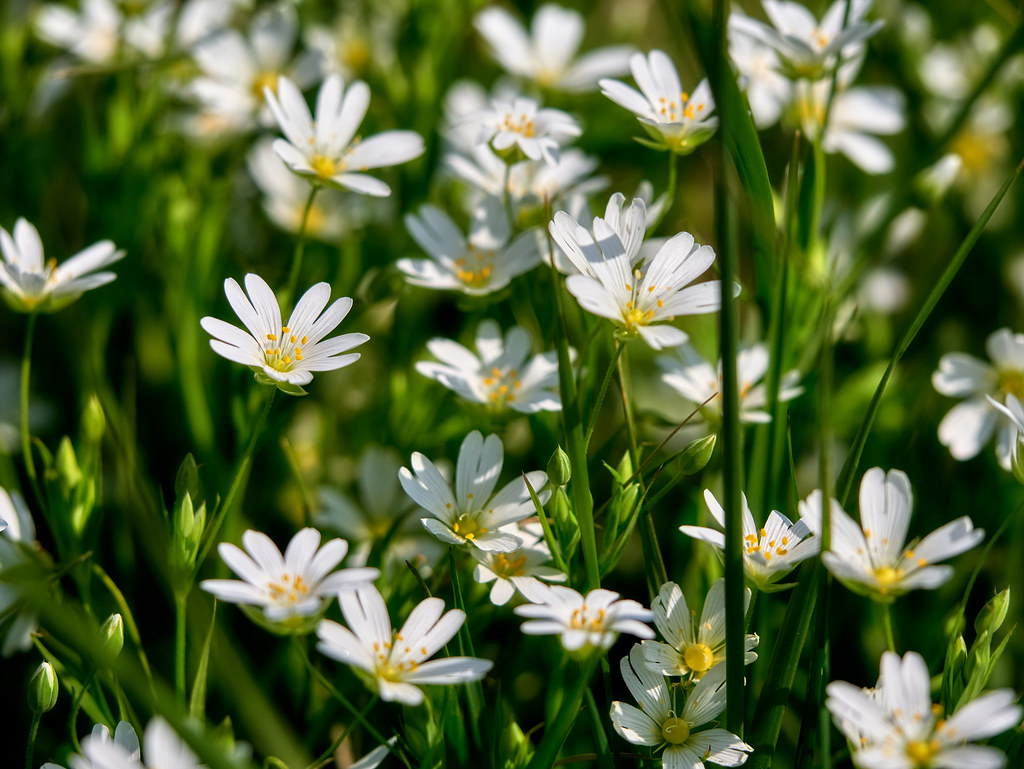
Greater Stitchwort (Stellaria holostea)
As pretty as stars, this member of the carnation family grows in abundant clusters in areas of the Park. Named after their herbal use in curing ‘stitch’, they are also plant food for bees and especially moths. They have an explosive seed-dispersal mechanism. In late spring, when the seed capsules ripen, they can be heard popping as they noisily fire their seeds. Some say that if you pick greater stitchwort, you will cause a thunderstorm !!
Cowslip (Primula veris)
Cowslips are beginning to flower in the wildflower meadow. A traditional native flower they are important nourishment for bees, beetles and butterflies such as the brimstone and Duke of Burgundy . The plant is said to have sedative qualities and was traditionally used to treat sleeping problems and coughs. The Spanish add the leaves to recipes for a citrusy flavour; they also traditionally flavour English country wine.
Spring is here and life is returning; a few short weeks ago there was little to be seen, but with some better weather, plant life is gathering pace. Here are some of the Park features this month, Easter weekend is a good time to get out on a nature walk and see what you can spot.
Besides, the daffodils, and primroses, most of which have been planted by the Friends since 2010, there are a variety of other flowers on show.
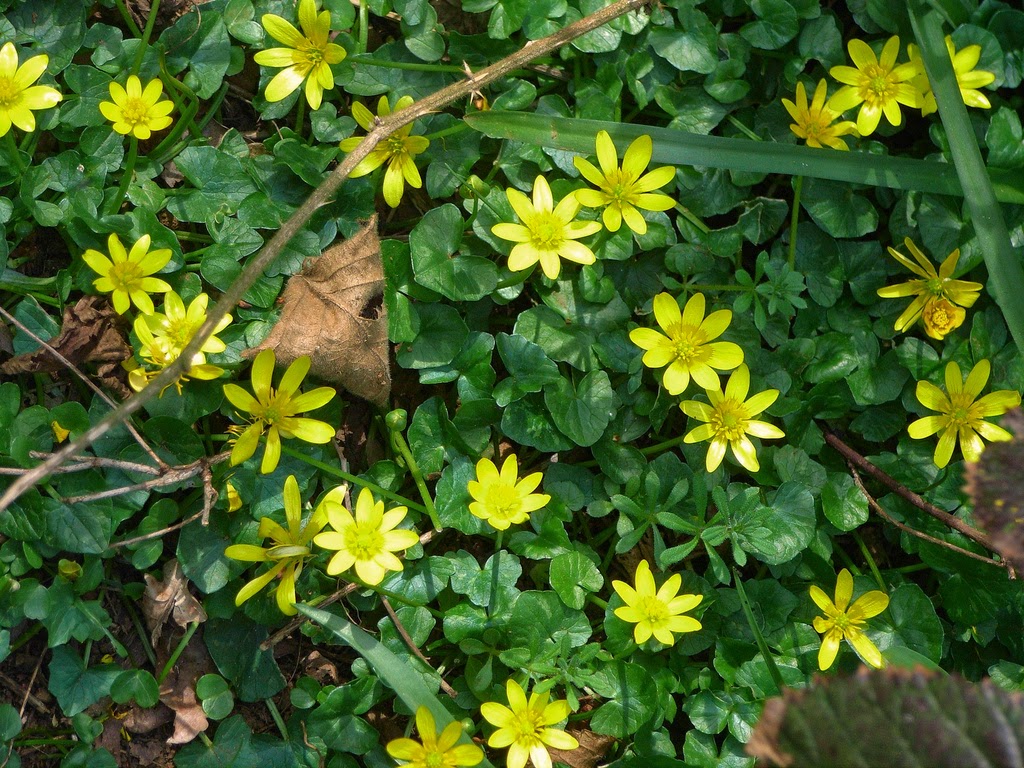
Lesser Celendine or Pilewort (Ranunculus ficaria)
A relation of the buttercup, Lesser Celendine is found in carpets all round the park. The name celandine itself comes from Latin chelidonia meaning ‘swallow’ because the flowers were said to appear when the swallows returned (in reality they appear much earlier!). The Celts called lesser celandine ‘Grian’ (sun) because of its bright yellow flowers that close up before rain. It was used for the treatment of haemorrhoids, hence its nickname
As the Valentine hearts come down , we are very pleased to announce that to celebrate Spring and life stirring again in nature Codswallop CIC will be running some Day in The Wood children’s educational self guided activities to do during daily exercise during March. More information to follow from them.
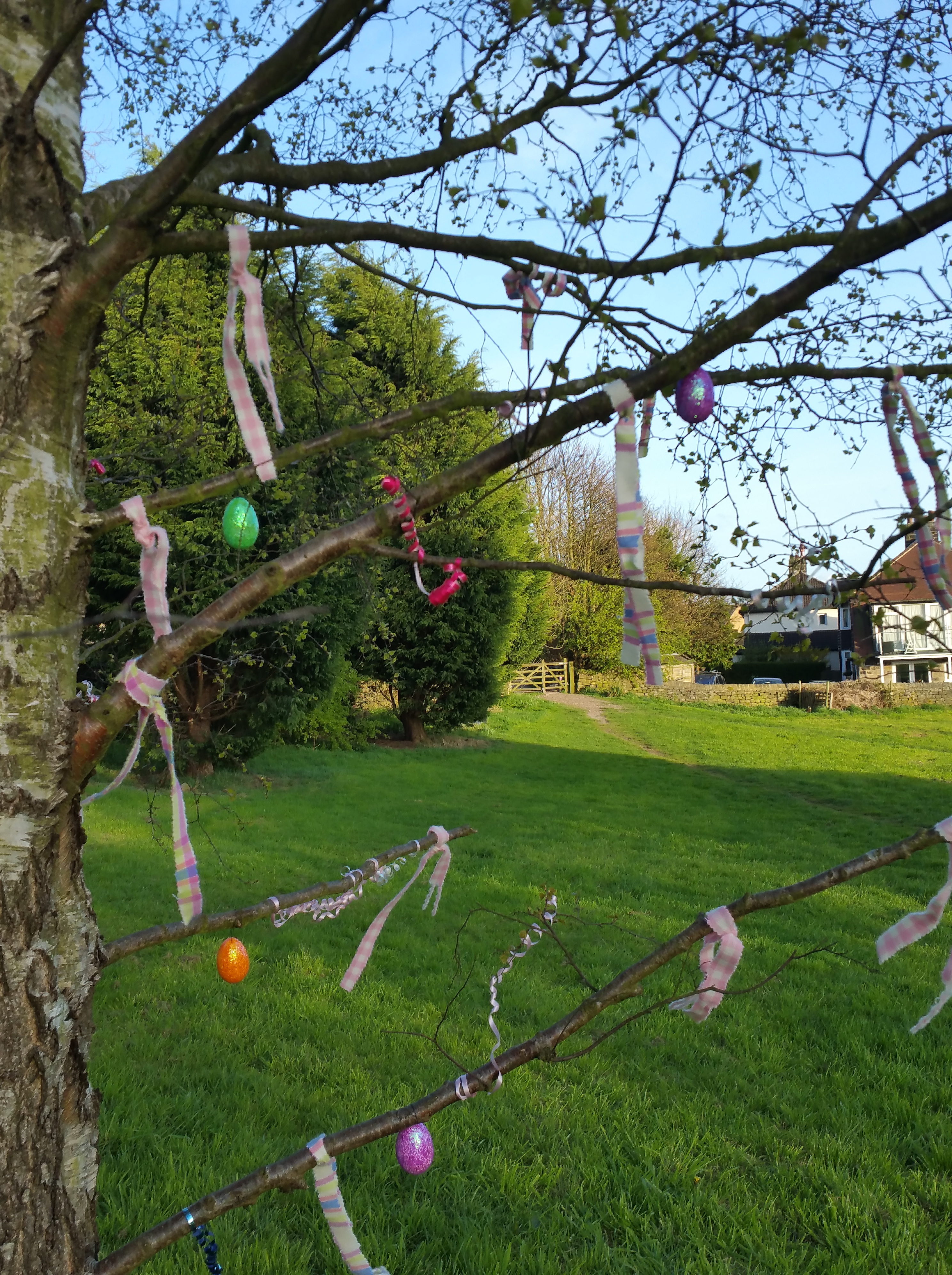
THEN, as Easter approaches The Park will be preparing for the Easter Bunny .
The Easter Tree
Lots to look forward to.
And you may find this map handy to find the places to watch out for different natural events taking place in the different areas of the Park.



 , we are very pleased to announce that to celebrate Spring and life stirring again in nature Codswallop CIC will be running some Day in The Wood children’s educational self guided activities to do during daily exercise during March. More information to follow from them.

 Friends of Parkinson's Park CIC
You must be logged in to post a comment.