Flower spotting in the park

After a walk in the park today I felt inspired to write a post on what I had seen. It feels as if the park has really blossomed over the last few weeks, no doubt helped by all the recent rain!

Image

Heath bedstraw on Great Brow

I headed first down the steep slope of Great Brow and towards the marshy area near the Bellway estate. The soft green hummocks of red fescue (Festuca rubra) and sheep’s fescue (Festuca ovina) grasses are peppered with swathes of the delicate white flowers of the heath bedstraw (Galium saxatile), a good indicator of acid grassland.

Honeysuckle (Lonicera) is creeping its way along the ground on the verge of bursting into flower alongside the tall spikes of common sorrel (Rumex acetosa).

Further along the slope is sheep’s sorrel (Rumex acetosella), a more delicate version of sorrel with tiny red flower spikes along with the feathery yellow flowers of tormentil (Potentilla erecta), both of which are found in acid conditions. Continue reading

A Salute to the 15th Airedale Scouts from the House of Commons

Poster Boy for Scouting !

A big, big, BIG thank you to the boys and girls, Scout leader Keith Park, and, especially, Group Scout Leader Maureen Cooper of the 15th Airedale Scouts, for coming to spend their Scout Community Week time on the Park.   As we make our case with Leeds City Council, to have the Park officially listed as a community ‘green’ asset, rather than potential housing land,  you have played a vital part in helping us do that.

Thank you as well,  to all the Friends who turned out to help improve the entrances; the work of digging out nettles, hedge garlic, and brambles, along with old concrete and clinker was not easy – it was, perhaps,  fortunate it was neither a hot, nor a wet day. Continue reading

Wild about Wildflowers: Sunday 15 April 2012

Today the rain just held off for the latest project to take place at Parkinson’s Park. As part of the RHS Britain in Bloom launch celebrating the Queen’s Diamond Jubilee and the beginning of National Gardening Week, a small band of volunteers sowed a 10 m square patch of prepared ground near the farm gate with a packet of cornfield annuals donated by the environmental charity Landlife. The seeds in the seed mix include corn poppy (Papaver rhoeas), corn marigold (Chrysanthemum segetum), corn chamomile (Anthemis arvensis), corncokle (Agrostemma githago) and cornflower (Centaurea cyanus) and should create a bright and colourful display. Councillor Latty came along to support the event and got his hands dirty!

Image

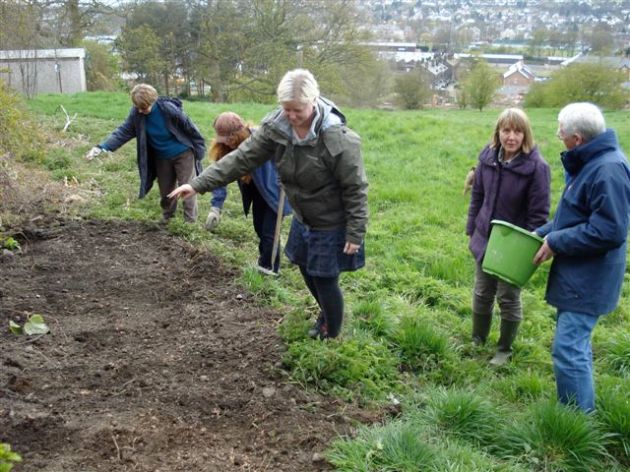
Scattering the seeds

In this photo (from left to right): Jane Blake, Josie Brooks, Nicola Denson, Chris Parapia and Councillor Graham Latty. Photo taken by Barbara Winfield

In the UK our wildflower populations are in serious decline with an estimated loss of 97% of the wildflower meadows between 1930s and 1980s. This is having a knock-on effect on the rest of the food chain. When wildflowers are lost the insects which feed upon them are lost too in many cases. Insects pollinate our plants, control other pests and provide food for birds and other animals. Continue reading

Bird Watch – Birdsong

You can listen to the Park’s birdsong on You Tube, or better still, take an early morning stroll and hear the real thing – hope there is not too much snow over Easter !!  Thanks to one of the Friends for providing this – Darren tells us this is likely a pair of song thrushes that he has seen near the copse.

Bird Watch – Sand Martins Move to Guiseley, by Darren Shepherd

Sand Martin (Source: Shropshire Wildlife Trust)

Well,  today I had a nice surprise.   I went to have a  quick look at the stone quarry at the top of Moor Lane in Guiseley,  only a stones throw from the park as the crow flies, and was amazed to see that the “sand martins” (riparia riparia) have returned from their long migration from Africa.  The sand martin is the smallest of the hirundines (swallows and martins) and the first to return from Africa.

If anybody would like to see them,  just park in the lay-by, then stand at the entrance gates and look to the right up the banking side (parallel with the farm track). This is where the sand martins raise their young,  in a “hole”in the sand bank.  We are very lucky to have these birds in Guiseley and it is the only nest site here.  It is also unusual that it is not near a river bank or lake,which is normally the favoured location. Look out for them feeding over the park.  Nature really is amazing.

Bird Watch – Wonderful Warbling by Darren Shepherd

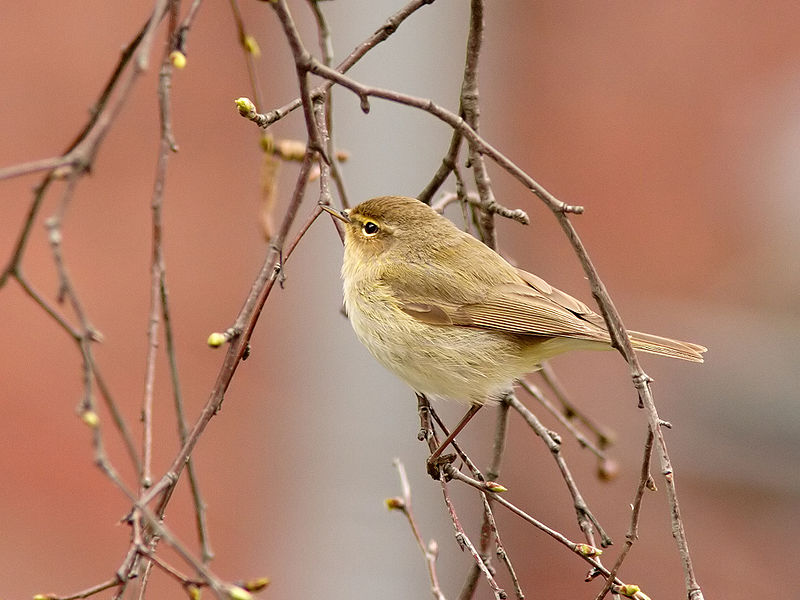
Chiffchaff (phylloscopus collybita). (Source: Image by א (Aleph), http://commons.wikimedia.org)

Well, I’m back from my foreign travels (well, Brighton actually) and it seems I’ve been followed !!

With the window open this morning, I awoke to the wonderful sound of the “chiffchaff” (phylloscopus collybita),  a delightful little warbler that spends our winters on”holiday”in the Mediterranean and south west Africa.  This little bird has flown all that way back and found Parkinson’s Park much to its liking, to re-fuel and build its body weight back up to its pre migration weight.  The bird may just be passing through to its breeding grounds further north, or,  it may have hatched from its egg in the Park in previous years, and be a male singing to establish a territory and attract a mate.  Amazing stuff !!

The next one to arrive in a week or so will be the “willow warbler”(phylloscopus trochilus), closely followed by the “blackcap” the king of the singers.  Can’t wait !!!

The Birds, the Bees and Our Jubilee Trees – Darren Shepherd

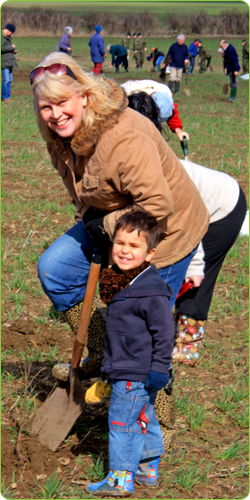
Liz, Ben and Freddie Lawson, digging the new 'supermarket' foundations

A great day yesterday, planting out our new trees, to create a field edge scrubland habitat for the birds and wildlife of Parkinson’s Park.  All the trees we planted are native British trees which provide food and shelter for our disappearing wildlife.  We planted hazel (nuts and catkins), elder (berries and flowers), blackthorn (flowers and sloe berries), dog rose (flowers and rose hips), and crab apple (flowers and fruit): a brilliant mix to diversify the habitat at the top of Great Brow, and complement the existing old, tall, hawthorn hedge.

Once grown, the new scrub area will benefit both resident and summer migrant birds by increasing the natural food harvest.  It will also provide shelter for willow warblers, chiffchaffs, blackcaps and garden warblers who breed and migrate through this area in large numbers in spring.

The tree-tits and goldcrests will love this improvement, Continue reading

Plant A Tree For The Queen’s Diamond Jubilee

Planting a Jubilee Tree

UPDATE 9AM 17TH MARCH – TREE PLANTING IS ON

To celebrate Her Majesty The Queen’s historic Dimond Jubilee in 2012, the Woodland Trust is encouraging people to come together in their neighbourhoods and plant small areas of trees.  The UK is one of the least wooded countries in Europe with only 4% native woodland cover; we should have at least twice as much.  So, the plan in 2012 is to create hundreds of wooded areas across the country, and 60 special Diamond Woods, all on public access land and for the benefit of all.  The idea is to  transform our landscape in a generation, provide bird and wildlife havens, and leave behind for our children a lasting and meaningful tribute.  The project includes the Woodland Trust’s new flagship Diamond Wood in the heart of The National Forest in Leicestershire

We are pleased to say, that the Friends of Parkinson’s Park, have been given 105 small Continue reading

Showcasing Traditional Crafts on St David’s Day

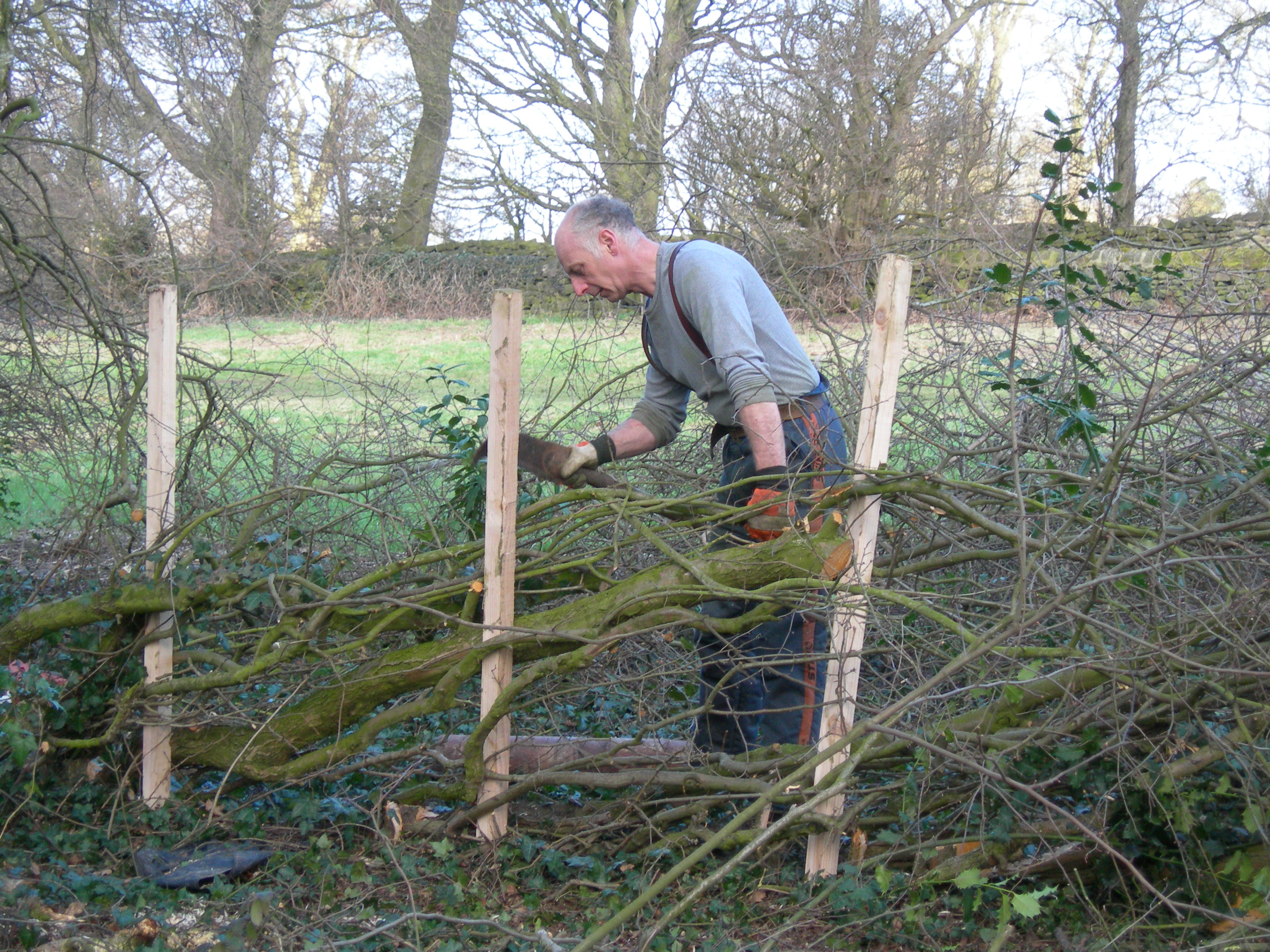
Tradational Craftsman Peter Coates Creating a Yorkshire Style Hedge

Peter Coates has started laying the copse hedges this week – Yorkshire Style.   Hedge laying is a traditional method of hedge management that dates back to pre-Roman times; there are different styles for different areas of the country, depending on the type of farming.  Laying is mostly used when hedges have become overblown – as is the case with the Park’s – although a hedge can become so bad that not even hedge laying will bring it back.  Fortunately, these hedges have not quite got to that stage – although the situation was close.

To recreate a viable, health, hedge the tall stems are cut almost through at the base, and then laid over at an angle of around 35 degrees: the cut stems, called pleachers, are tucked Continue reading