Park Likely To Be Taken Out Of The SHLAA

As a result of Cllr Latty’s intervention on the Park being in the SHLAA,  and some complaints received from individual Friends, Leeds Planning asked FOPP for a map of the Park – which we have now given them.   Planning have said it is highly likely that the land will be removed from the database at the next SHLAA Partnership meeting in June/July 2012.

It does seem incredible, that the people who have the final say on what land is in or out of the SHLAA, is a Partnership team of people consisting of 3 developers, 1 housing association person, 3 planners, a member of Yorkshire Forward, a member from the Council for the Protection of Rural England, and one ‘community representative!!

This still leaves the Kelcliffe Lane land in the SHLAA, but at least this will be a start – we will keep you posted.
 

Battle To Remove Park From the SHLAA

Protecting Greenbelt (source: Folkestone Jack's Blog)

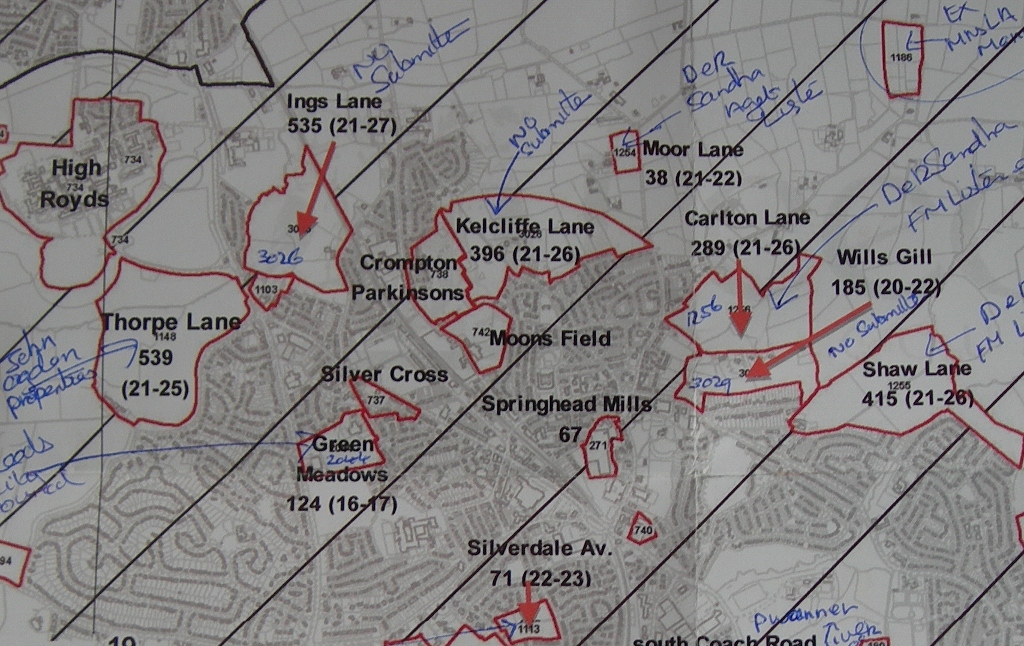
Following on from the appearance of Parkinson’s Park in the Strategic Housing Land Availability Assessment, Councillor Graham Latty has taken up the issue with Leeds City Planning Department and demanded that it is taken off the list.

At the same time, Leeds NW MP Greg Mulholland,  has demanded that Yeadon Banks, which has fought to get Village Green status to repel developers, is also taken out of the SHLAA.  Meanwhile,  residents in Rawdon have formed an action group to try and protect Rawdon Billing, which not only appears in the SHLAA, but whose owners (Rawdon Trust) want to sell it for development. And, to add the the catalogue of beauty spots in danger,  a Cragg Hill action group from Horsforth,  is sending out the troops again to try and stop Redrow getting planning permission to build 47 houses on an N32 nature area, which is also part of Woodside Conservation Area and on green belt – a plan that was stopped by residents twelve years ago. Continue reading

Are Houses Going To Be Built On The Park?

Guiseley SHLAA Areas Around Parkinson's Park

Parkinson’s Park was given to the people of Guiseley by Frank and Albert Parkinson.  But, the covenant which used to be on the land deeds (and has been seen in the safe at Crompton Parkinson’s) has been ‘lost’.  The land is now owned by the developers Bellway Homes, who have built Edison Fields, and provided funds to regenerate the Park.  Bellway will keep the Park maintained and work with FOPP, until the future of the Park’s is agreed – which is now the subject of discussion between FOPP, Bellway and facilitated by Councillor Graham Latty. Continue reading

All Ready for a Hockney View

All ready for Hockney treatment

In a jostling, bustling, hogarthian, crowd scene, hands reached for guide books on Yorkshire, amidst the umbrellas, postcards, and souvenirs at the end of David Hockney’s A Bigger Picture.  The lad from Bradford, has done us proud; as people from around the world queue to oooooo and ahhhhhh, at the jewel coloured Saltaire, and woods around Bridlington.  I do hope, if they make their way to our climes, they realize Salts Mill will be robed in a more enigmatic palette of grey.

More than anything, it is the sheer quantity of pictures, many of the same scene, each using colour to capture a different seasonal ambiance, that impresses.  I’m sure some BBC culture bod would enthuse about post modern relevance, or sneer at delusions of lost Empire – as the hegemony takes them.  However,  I left feeling proud of our county, and with ideas running through my head – isn’t that what art if for? Continue reading

Showcasing Traditional Crafts on St David’s Day

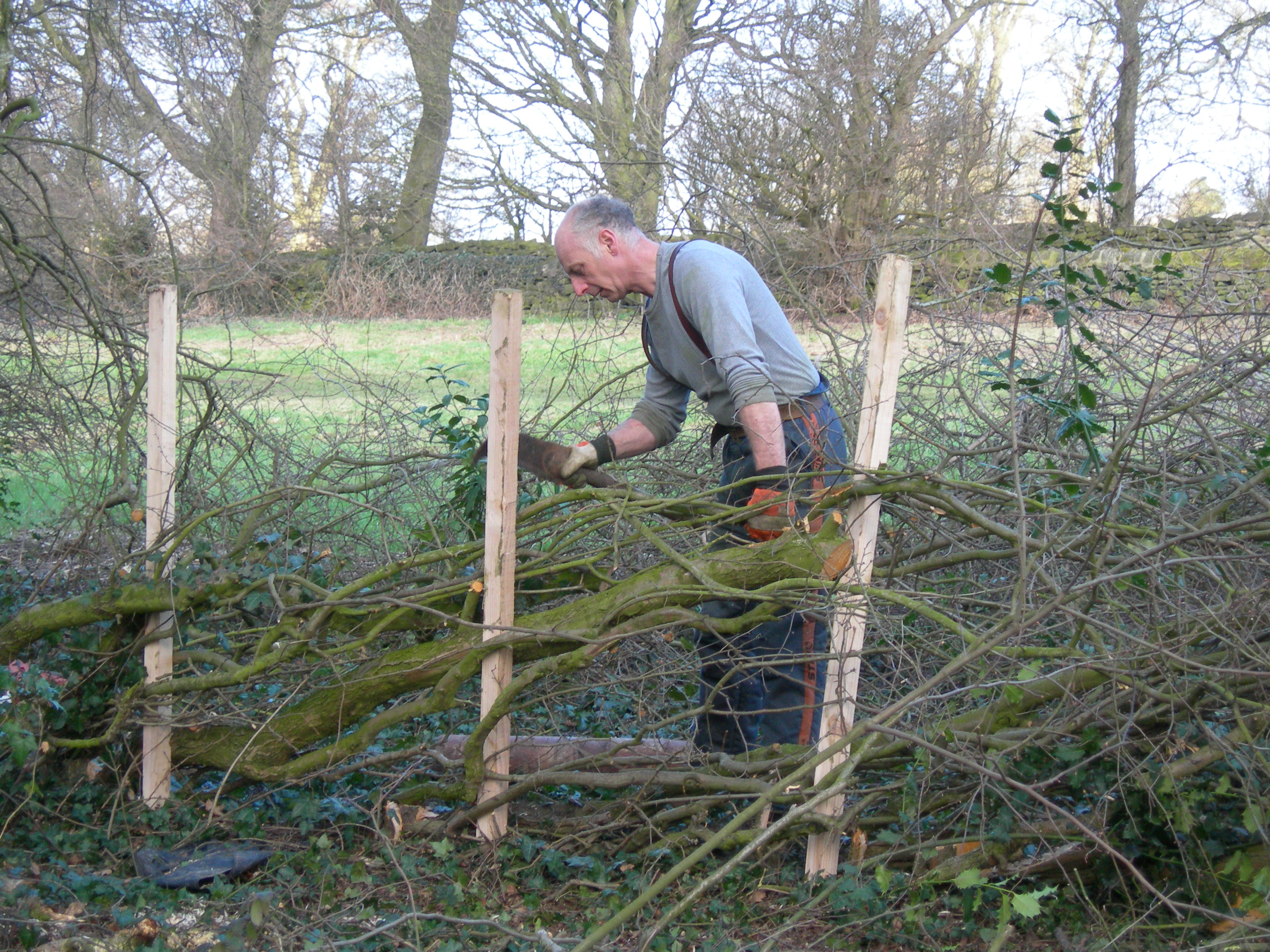
Tradational Craftsman Peter Coates Creating a Yorkshire Style Hedge

Peter Coates has started laying the copse hedges this week – Yorkshire Style.   Hedge laying is a traditional method of hedge management that dates back to pre-Roman times; there are different styles for different areas of the country, depending on the type of farming.  Laying is mostly used when hedges have become overblown – as is the case with the Park’s – although a hedge can become so bad that not even hedge laying will bring it back.  Fortunately, these hedges have not quite got to that stage – although the situation was close.

To recreate a viable, health, hedge the tall stems are cut almost through at the base, and then laid over at an angle of around 35 degrees: the cut stems, called pleachers, are tucked Continue reading

Oak Canopy & Logs – Questions

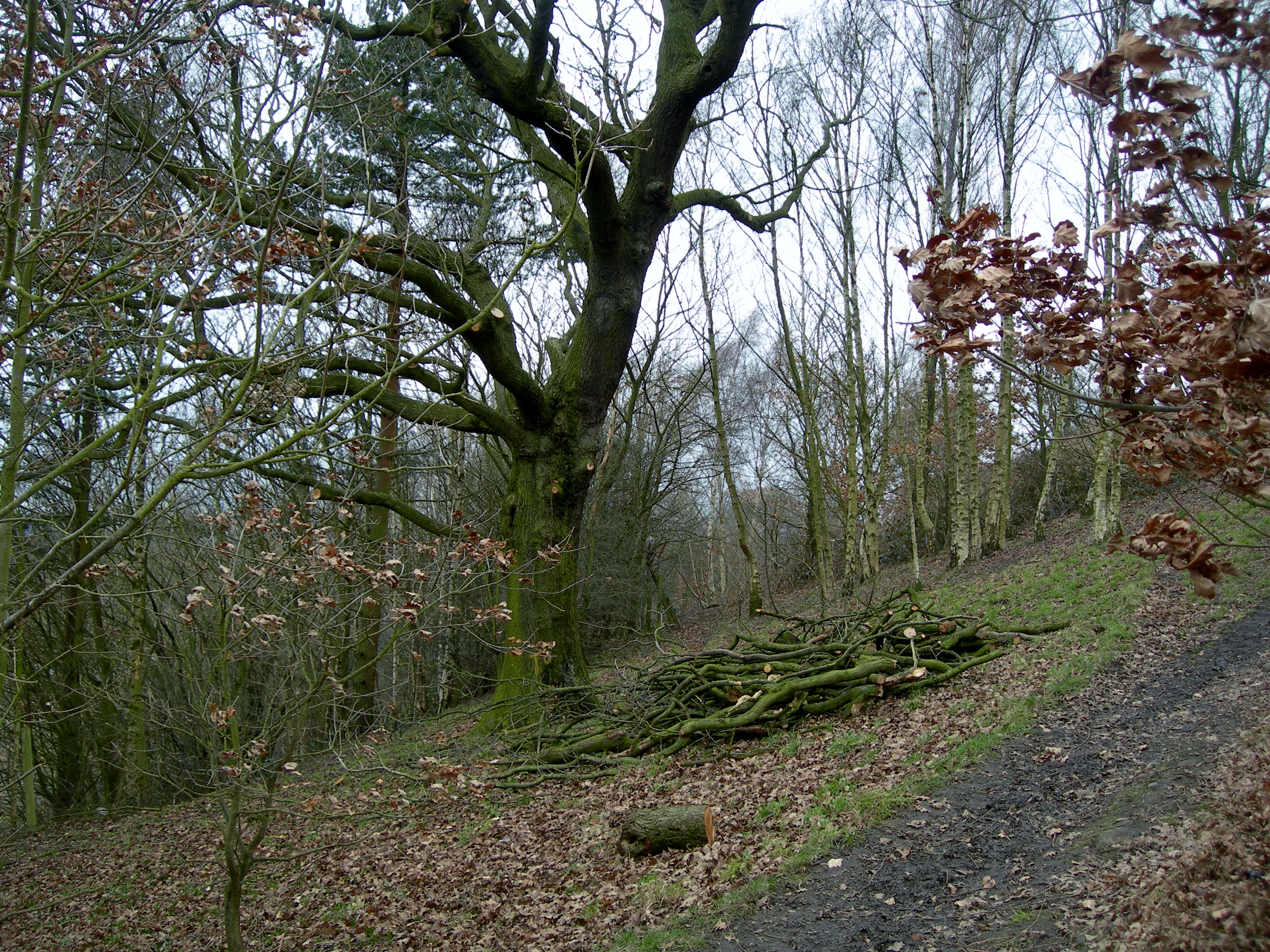
Dead wood cut from the oak trees

The tree work has generated many questions.

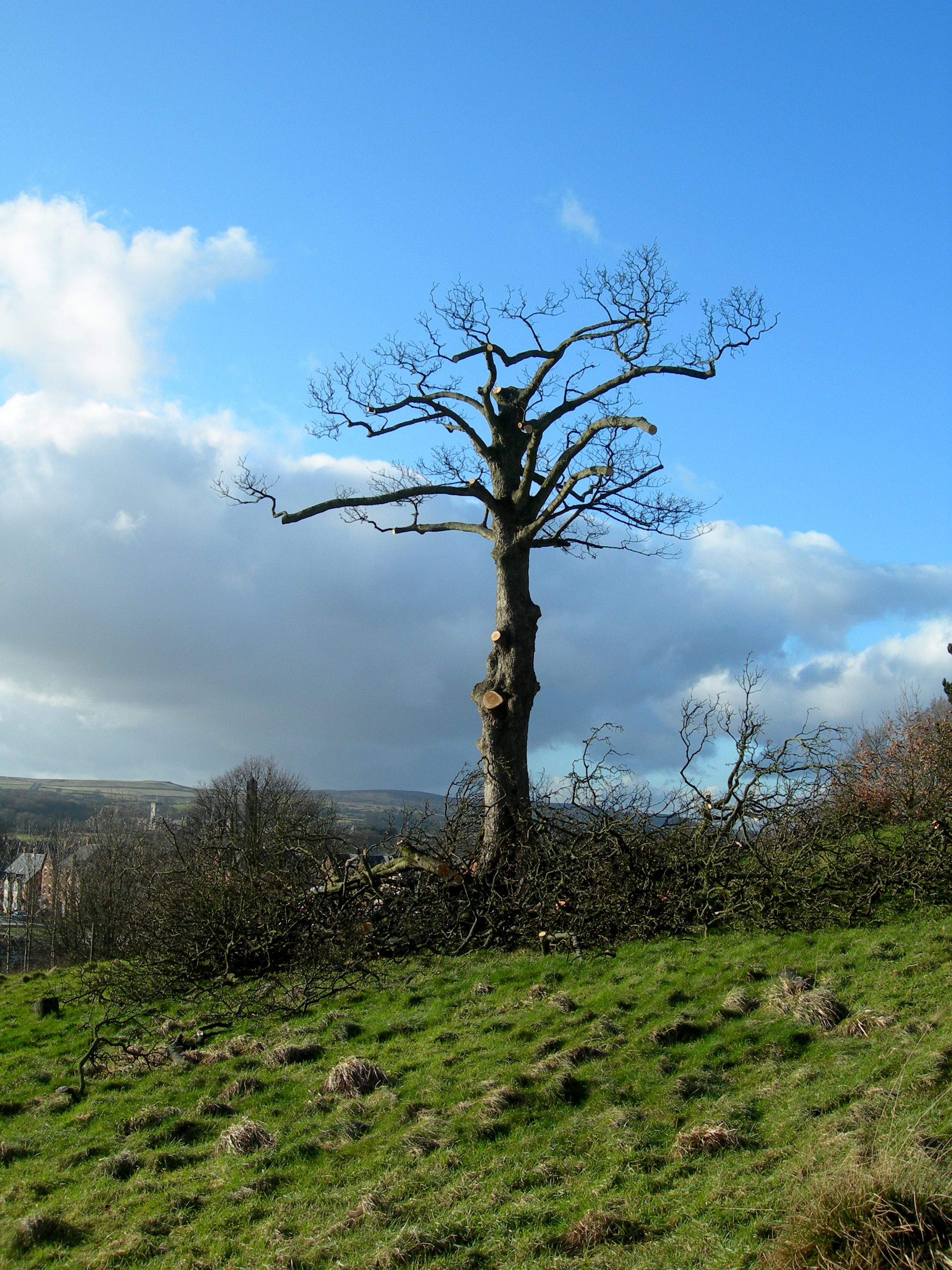
One recent one is ‘why the oak tree canopy has been cut back, as it was lovely to walk under?’  Answer – It is dead wood that has been cut out of the trees.   If left these 100 year old oak trees would deteriorate, and there are signs that the neglect of the past 10 years has started that process.  By cutting out the dead wood the trees will hopefully put on new growth and last another 100 years.  In addition,  dead wood, wind and a path do not make for a safe environment in a world where ‘ambulance chasing’ is rife. Continue reading

RIP Sycamore

Seconds to go

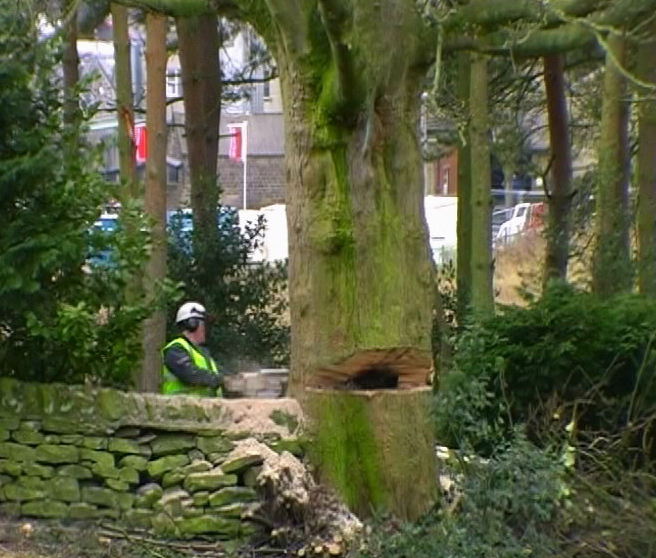
At around 9.40am this morning,  a piercing ‘crack, crack’ echoed across Clapper Brow,  quickly followed by the shout of FALL from Paul Elbourne, of Beechfield Tree Services; then, the sycamore on the edge of the park gracefully fell over; small branches and twigs exploding in all directions like a bursting firework.   Luckily, David Myers, FOPP’s intrepid film maker, was there to capture the moment for posterity.

It was unfortunate that the sycamore had to be felled, but, it has rotted from the base.  This had allowed squirrels to burrow inside to make a nice cosy ‘executive home’.   The result was a core of black rotting wood and soil (as can be seen in the picture)  with a circle of only around 4 inches of good wood left holding the tree up: threatening Steve Salt’s house.

Paul was extremely pleased with the delicate operation and the lack of damage to the surrounding area, whilst David compared it to a Fred Dibnah ‘extravaganza’  (David knew Fred).

The tree may have ended its growing phase of life, but it will not be leaving the Park.  The trunk will be moved to a safe area nearby so that it can become a ‘housing estate’ for wildlife and insects and a part of the ever turning circle of life.   The smaller branches will be made into woodchip,  and used around the Park.

Taming the Copse

Daylight is let into the copse to encourage scrub and healthy trees

We know, from all the feedback we have received,  that the ‘taming’ of the two copses in the Park has been a priority with a lot of people.  The main reason being their use as a ‘drugs den’ (both plastic packets and needles have been found in quantities)  and the associated  accumulation of unsightly rubbish and bottles – a danger to both children playing in the Park and dogs.  The situation got so bad, that ‘vigilante’ groups threatened to chop the hawthorn down themselves.   So,  the sight of the thicket coming back under management between now and April will be a welcome sight for many.

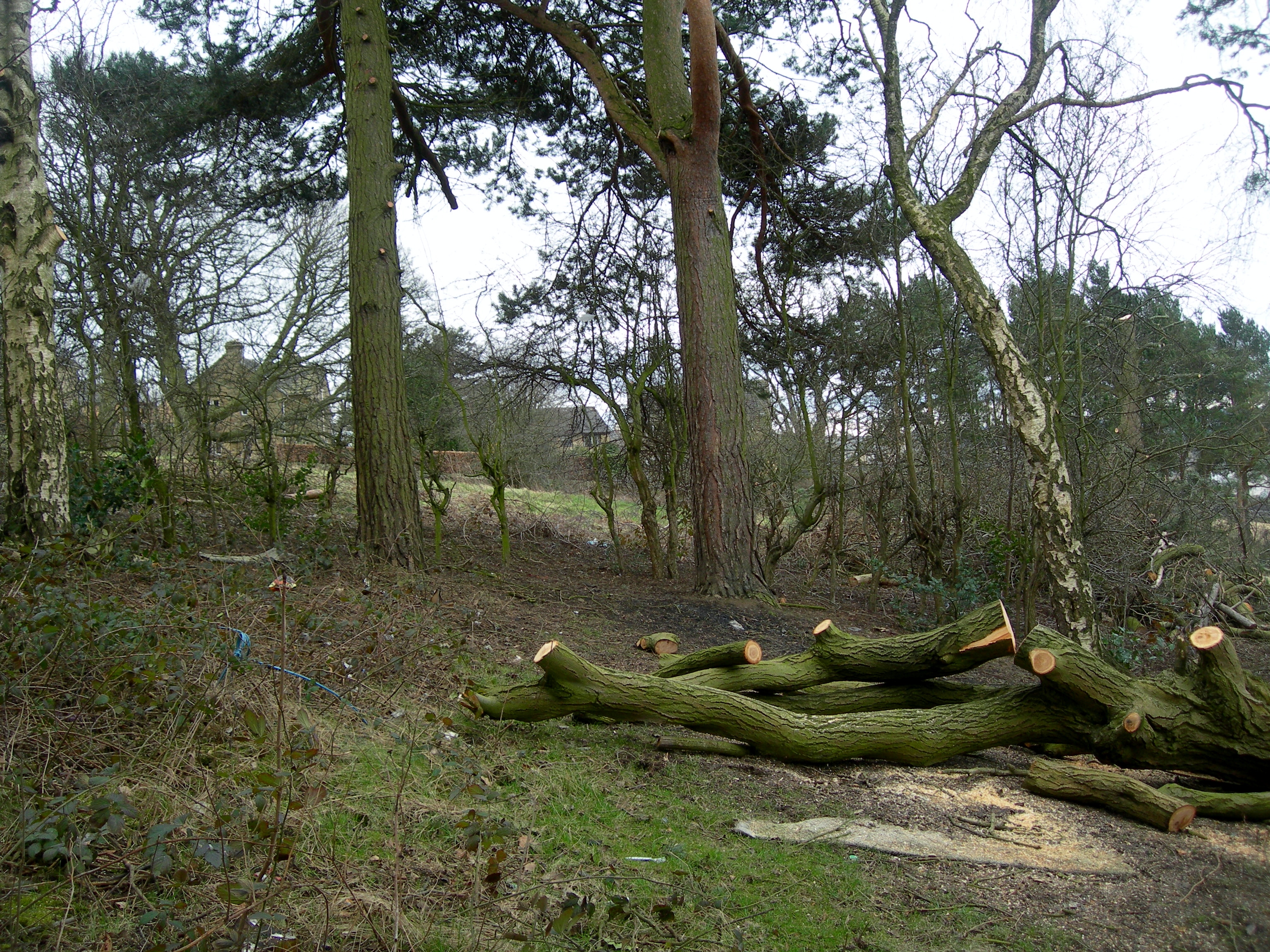
The idea is to lay the hedges Yorkshire style and thin out the wood in the middle so that light floods back in, thereby encouraging brambles and scrub to flourish and provide a quiet, undisturbed habitat for wildlife; including the nesting birds.  A lighter, airier atmosphere will also help preserve and strengthen the pine trees and silver birch in both areas.

Mystery – Can You Help

Tyre Tracks in the Bank

Between 8pm on Monday evening and 7am Tuesday morning,  someone decided that they didn’t like the new handrails on the steps.  Instead of just informing someone of their issue; they kicked the handrail down with heavy, muddy boots.  They then threw the handrails to the bottom of the steps.  Meaning, of course, that the steps are now less secure for the older people who use them to get into the Park.

The mystery is, however, that besides the wrecked posts are tyre tracks from a not-very-big,  four wheel vehicle.  Now,  how long has it been since a vehicle went along Kelcliffe Lane?  This track went from Hillside all the way along to Oxford Avenue.   The vehicle, at some points, mounting the side banks at Continue reading

Oooo; That Looks Brutal

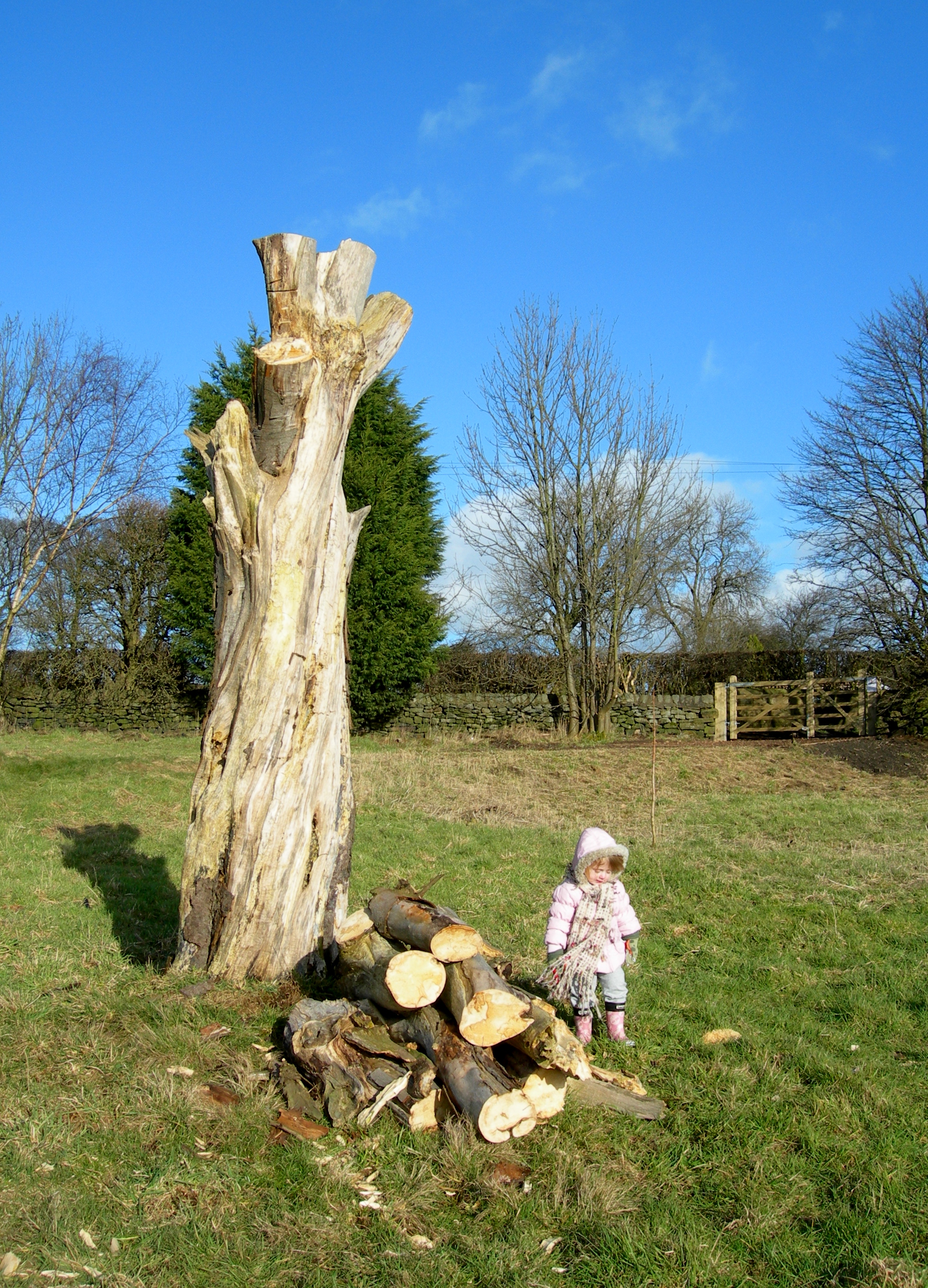
Managing the Decline of a Sycamore

Unfortunately several trees in the Park,  mostly the horse chestnuts,  are dying.   Instead of felling them,  it has been decided to ‘manage the decline’, and carry out a form of pollarding.   By taking out a lot of the head and lower branches,  the tree will be less likely to be blown over in a high wind – as happened in the recent gales with some of the nearby conifers.   Secondly,  children will not be able to swing on the lower branches, thus endangering themselves and the tree.   The tree may well also put on some new growth.

We will have to fell one of the large sycamores in the wall of the Park, as it is dangerous, and in danger of falling on a nearby house.