Bird Watch – Sand Martins Move to Guiseley, by Darren Shepherd

Sand Martin (Source: Shropshire Wildlife Trust)

Well,  today I had a nice surprise.   I went to have a  quick look at the stone quarry at the top of Moor Lane in Guiseley,  only a stones throw from the park as the crow flies, and was amazed to see that the “sand martins” (riparia riparia) have returned from their long migration from Africa.  The sand martin is the smallest of the hirundines (swallows and martins) and the first to return from Africa.

If anybody would like to see them,  just park in the lay-by, then stand at the entrance gates and look to the right up the banking side (parallel with the farm track). This is where the sand martins raise their young,  in a “hole”in the sand bank.  We are very lucky to have these birds in Guiseley and it is the only nest site here.  It is also unusual that it is not near a river bank or lake,which is normally the favoured location. Look out for them feeding over the park.  Nature really is amazing.
Bird Watching in the Park

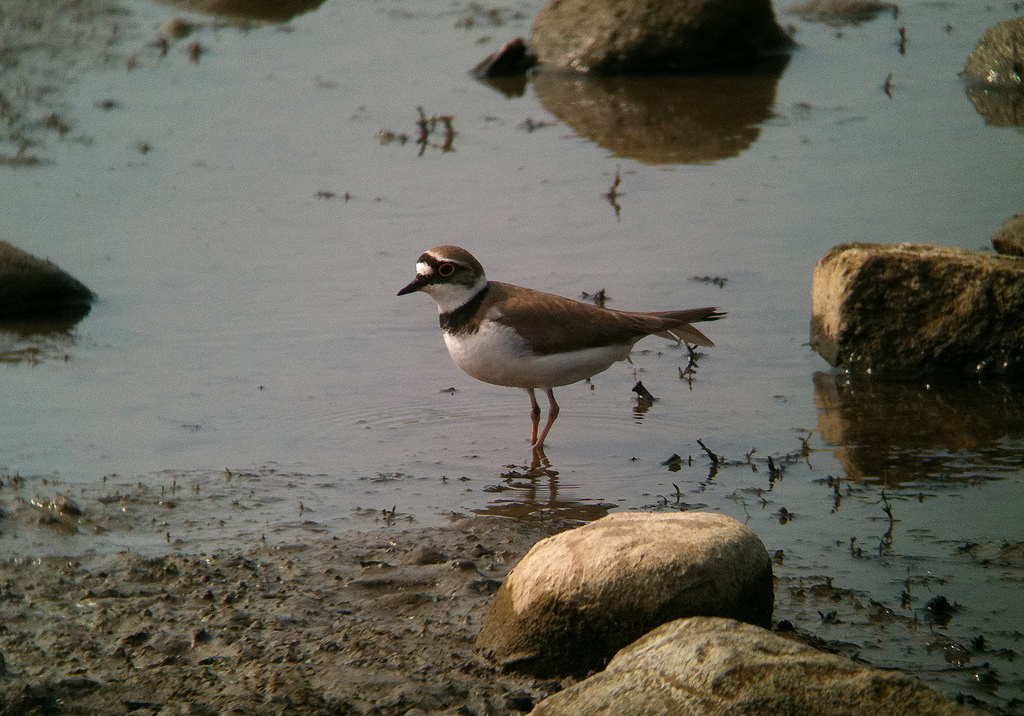
Little Ringed Plover - (Source, Steve Leo Evans, Flickr)

Darren Shepherd of Nethercliffe Road, is a keen ornithologist, and has left this fascinating comment on the ecology page, which deserves greater prominence.

“I would like to add a few more birds to the list of those seen in the Park. The rarest of the bunch, in the past few years, has been the successful breeding of Little Ringed Plover on the building site.”  This is a wading bird, that likes gravel pits and river shingle beds.  “Another wading bird that I suspect has bred in the area is the Oystercatcher” a bird that is regularly found on the coast but has started to move inland.  “Another regular bird is the Redshank“, which likes damp habitats such as salt marshes and flood meadows.  The sightings of these birds would link in perfectly with the fact that the lower slope of Clapper Brow and Great Brow have many natural springs, and the land is quite boggy – the Kel of Kelcliffe, means spring.  When Crompton Parkinsons were in residence they controlled this water flow as best they could, but over the years nature has reasserted itself. Continue reading