Bird Watch – Sand Martins Move to Guiseley, by Darren Shepherd

Sand Martin (Source: Shropshire Wildlife Trust)

Well,  today I had a nice surprise.   I went to have a  quick look at the stone quarry at the top of Moor Lane in Guiseley,  only a stones throw from the park as the crow flies, and was amazed to see that the “sand martins” (riparia riparia) have returned from their long migration from Africa.  The sand martin is the smallest of the hirundines (swallows and martins) and the first to return from Africa.

If anybody would like to see them,  just park in the lay-by, then stand at the entrance gates and look to the right up the banking side (parallel with the farm track). This is where the sand martins raise their young,  in a “hole”in the sand bank.  We are very lucky to have these birds in Guiseley and it is the only nest site here.  It is also unusual that it is not near a river bank or lake,which is normally the favoured location. Look out for them feeding over the park.  Nature really is amazing.
Bird Watch – Wonderful Warbling by Darren Shepherd

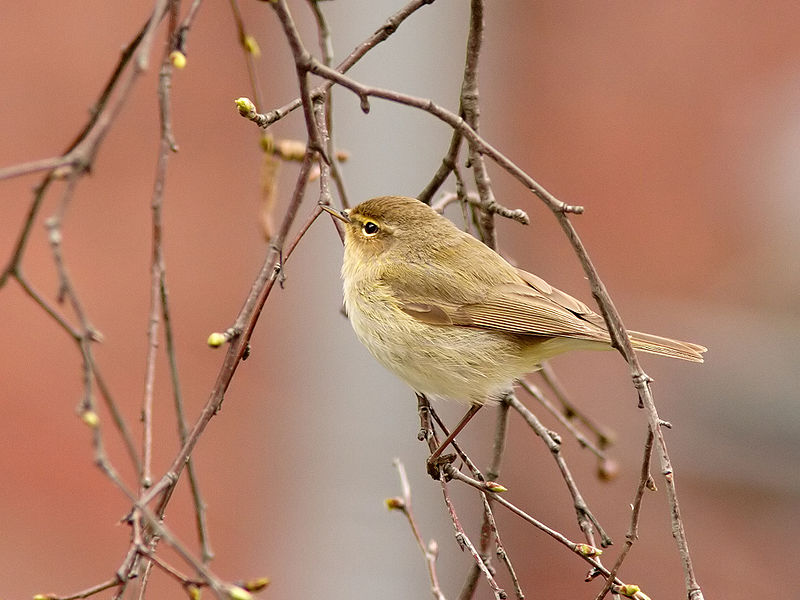
Chiffchaff (phylloscopus collybita). (Source: Image by א (Aleph), http://commons.wikimedia.org)

Well, I’m back from my foreign travels (well, Brighton actually) and it seems I’ve been followed !!

With the window open this morning, I awoke to the wonderful sound of the “chiffchaff” (phylloscopus collybita),  a delightful little warbler that spends our winters on”holiday”in the Mediterranean and south west Africa.  This little bird has flown all that way back and found Parkinson’s Park much to its liking, to re-fuel and build its body weight back up to its pre migration weight.  The bird may just be passing through to its breeding grounds further north, or,  it may have hatched from its egg in the Park in previous years, and be a male singing to establish a territory and attract a mate.  Amazing stuff !!

The next one to arrive in a week or so will be the “willow warbler”(phylloscopus trochilus), closely followed by the “blackcap” the king of the singers.  Can’t wait !!!

The Birds, the Bees and Our Jubilee Trees – Darren Shepherd

Liz, Ben and Freddie Lawson, digging the new 'supermarket' foundations

A great day yesterday, planting out our new trees, to create a field edge scrubland habitat for the birds and wildlife of Parkinson’s Park.  All the trees we planted are native British trees which provide food and shelter for our disappearing wildlife.  We planted hazel (nuts and catkins), elder (berries and flowers), blackthorn (flowers and sloe berries), dog rose (flowers and rose hips), and crab apple (flowers and fruit): a brilliant mix to diversify the habitat at the top of Great Brow, and complement the existing old, tall, hawthorn hedge.

Once grown, the new scrub area will benefit both resident and summer migrant birds by increasing the natural food harvest.  It will also provide shelter for willow warblers, chiffchaffs, blackcaps and garden warblers who breed and migrate through this area in large numbers in spring.

The tree-tits and goldcrests will love this improvement, Continue reading

Bird Watch – Bird of Prey Seeks Mate by Darren Shepherd

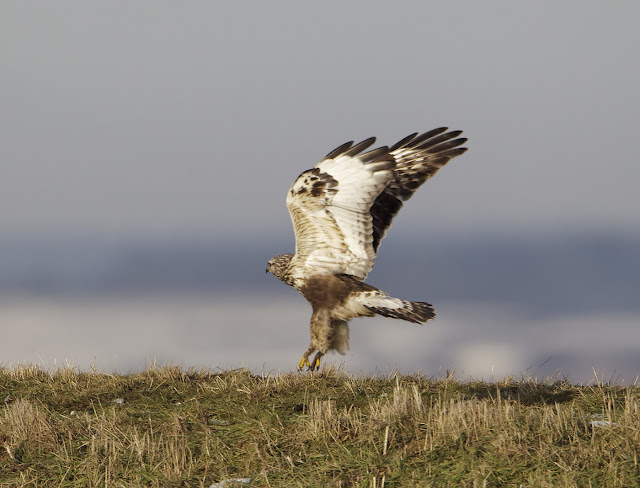
Rough Legged Buzzard (source: copyright Graham Catley, pewit.blogspot.com)

Well,  spring is just around the corner, and with that the birds are getting excited and singing their hearts out in order  to claim their territory and attract a mate; St Valentine’s day is not just for humans.  Folklaw in some parts has it as the day birds choose their mate and Geoffrey Chaucer mentions ‘Saynt Valentyn’ in his mid-fourteenth-century poem “The Parlement of Fowles” – where three male eagles seek the’claw’ of a female eagle .  In Parkinson’s Park, you may have heard the resident great tits chirping away with their “teacher teacher teacher”calls, along with their pals, the blue tits. Continue reading

Bird Watch – Winter Visitors by Darren Shepherd

Goldcrest - (source John Smith, Halstead & District Photographic Society)

Bird life in the Park this January has been quiet, although there are still a few birds about, including some winter visitors from Scandinavia and Russia. The commonest of these visitors is the redwing (turdus iliacus),  which can be seen in the Park occasionally; most obviously at night on migration south, when its “stuuf” piping call can be clearly heard.

The second ‘visitor’ is the fieldfare (turdus pilaris) a slightly larger member of the thrush family which has a blueish plumage,  in comparison to our resident mistle thrushes Continue reading

Bird Watch – Pink Foot in the Park, by Darren Shepherd

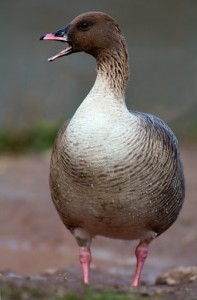
Pink Footed Goose (Source: Annimal Spot)

Darren reports that yesterday, Thursday 12th January,  around 3pm, a skein of about 80 Pinkfeet geese flew over the Park, heading  north northwest.    The same birds were then seen at Barden Scale, Bolton Abbey at about 3.30pm.

The pink-footed goose (Anser Brachyrhynchus), does not breed in the UK, but over-winters here in places like Norfolk and Lancashire,  before returning ‘home’ to Spitzbergen, Iceland and Greenland.  Darren’s conclusions are that Parkinson’s Park appears to be on a migration flyway.  So, expect more wonderful V formations in the coming months.

Bird Watch – Calling Curlews, by Darren Shepherd

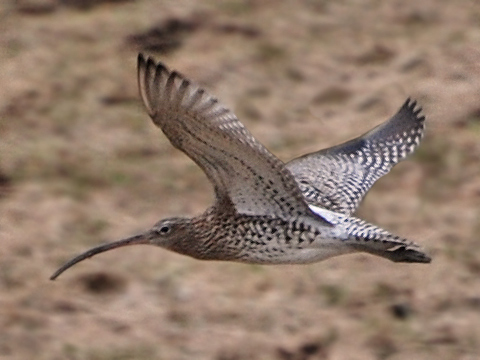
Curlew Flying - (Source: Scotlandincolour.com)

Night and day, the wildlife and birds of the Park live their lives and have their ‘adventures’, and it is worthwhile taking time to slowdown to their pace and just observe.

Today, 9th January, a red kite, with no wing tags, circled overhead.  Many kites have wing tags of different colours,  the left wing gives the place they fledged, and the right the year.   As ours has no tags,  they have either fallen off, or, it is wild.  The kite seems to be in the park regularly now, although, as today, it is frequently harassed by one of the local crows – these Continue reading

Bird Watching in the Park

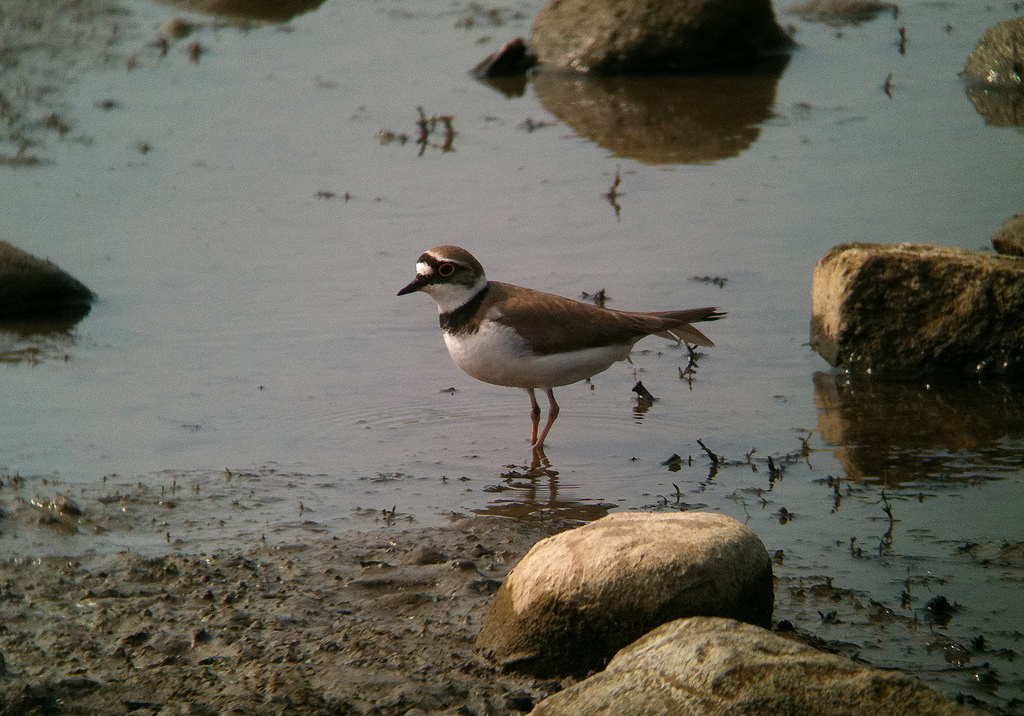
Little Ringed Plover - (Source, Steve Leo Evans, Flickr)

Darren Shepherd of Nethercliffe Road, is a keen ornithologist, and has left this fascinating comment on the ecology page, which deserves greater prominence.

“I would like to add a few more birds to the list of those seen in the Park. The rarest of the bunch, in the past few years, has been the successful breeding of Little Ringed Plover on the building site.”  This is a wading bird, that likes gravel pits and river shingle beds.  “Another wading bird that I suspect has bred in the area is the Oystercatcher” a bird that is regularly found on the coast but has started to move inland.  “Another regular bird is the Redshank“, which likes damp habitats such as salt marshes and flood meadows.  The sightings of these birds would link in perfectly with the fact that the lower slope of Clapper Brow and Great Brow have many natural springs, and the land is quite boggy – the Kel of Kelcliffe, means spring.  When Crompton Parkinsons were in residence they controlled this water flow as best they could, but over the years nature has reasserted itself. Continue reading