Development of a 20th Century Park

We have acquired a number of pictures of the Park as it developed over the years.

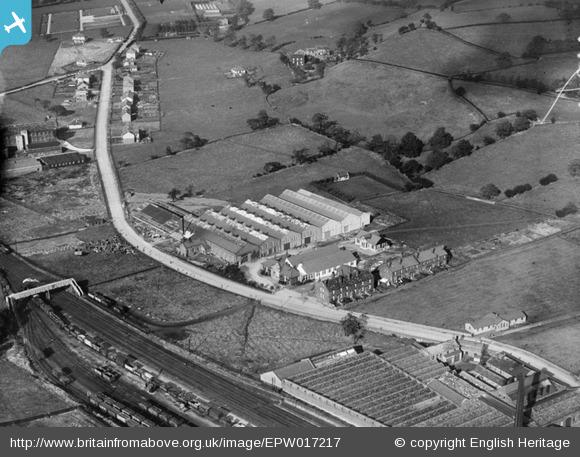
This is the earliest picture we have of the Park taken around 1926 just before F & A Parkinson merged with Crompton & Co to form Crompton Parkinson’s. The Park is still grazing fields, some belonged to Kelcliffe Farm, and some to Dibb’s a local grocer. You can see the field walls and a small pump house near where the top copse is now – the ground there still gets very wet. The area with the trees was called Clapper Brow with a link to an historic rabbit warren. The large field had been called Potterton Brow after a 16th/17th century tenant.

This is probably the late 1930s (we think 1938) Continue reading

1926

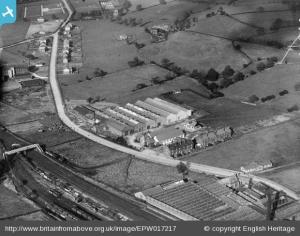
Parkinsons park 1926Graham Hogben has sent us this photo of the fields that became the Park 10 years later in 1937.  The road is Netherfield Road,  newly made up, and the buildings  in the middle are Greenshaw Terrace, with the two F & A Parkinson factories behind.  The following year F & A Parkinson of Guiseley Motor Manufacturers, teamed up with Crompton’s from Essex.  The large lampworks was built in 1932.

The buildings at the bottom of the picture are Moon’s Mill, next to the Railway sidings.  At the top, in glorious isolation is Kelcliffe House and tenements.  Between eighteenth century and 1838, this has been a tannery.

In the park you can clearly see the line of Oak trees that were planted around the turn of the 20th century, probably by Jonathan Peate.  The trees are now shrouded in the wooded area of the Park.  For more history of the Park area see here.

The photo comes from Britain From The Air, a resource made available by English Heritage.

All Our Stories – Medieval Fields Cover Kelcliffe

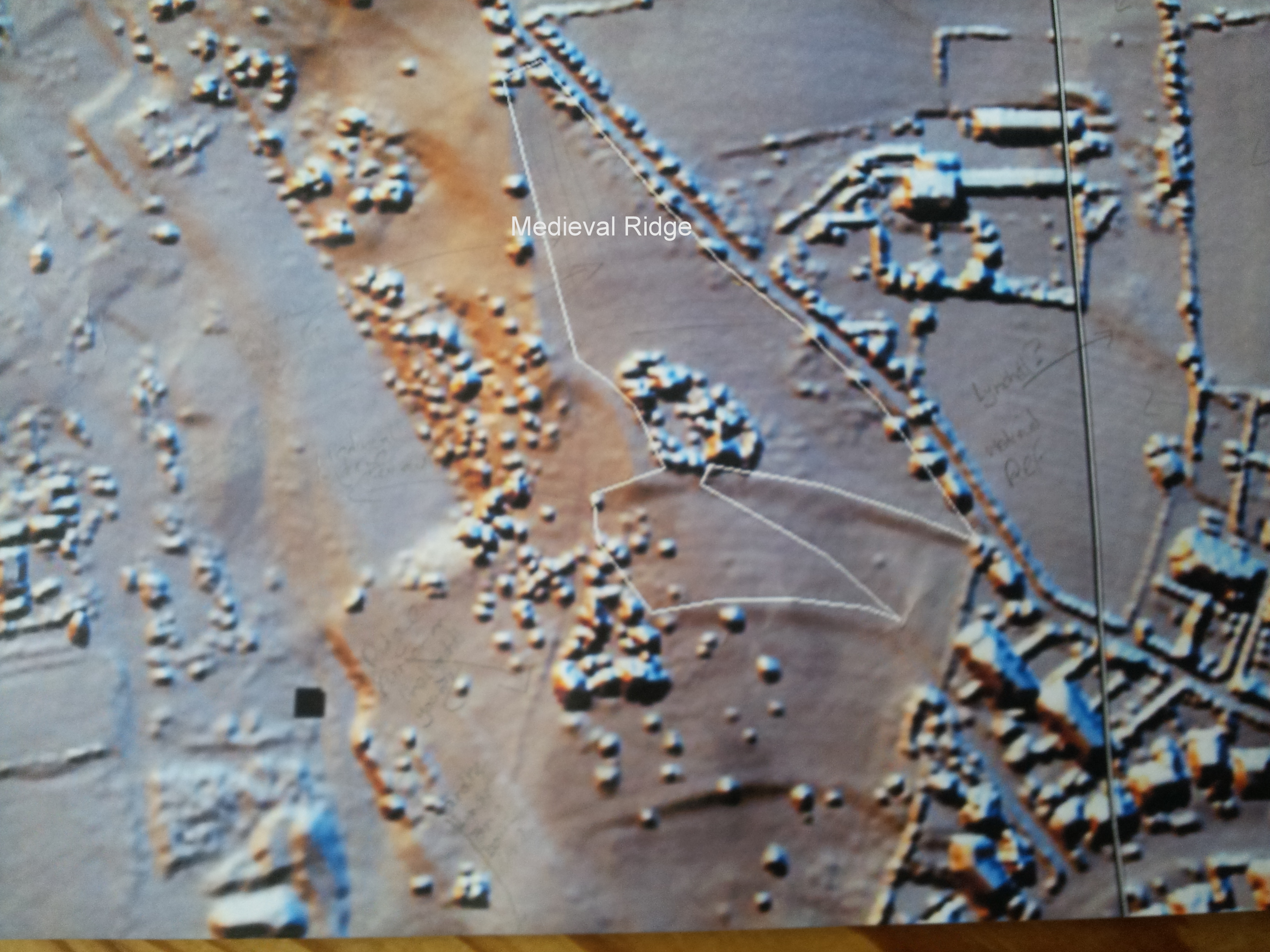
LIDAR data showing the park and the various ridge and furrow, including an old medieval ridge

LIDAR data showing the park and the various ridge and furrow, including an old medieval ridge

Throughout the Summer Barbara Winfield and I have been ploughing on with the research for All Our Stories: we now have a good record of owners and tenants throughout the eighteenth and nineteenth centuries (which will be useful for local family historians), and have even been able to get back into the sixteenth century manor court rolls, with the kind help of Stonyhurst College in Lancashire, where some records are kept.

However, our most fascinating discovery has been with the help of English Heritage and LIDAR data (a remote sensing technology that uses high altitude laser to produce reflected light off dips, lumps, bumps and ditches – more information here).  With this, academic papers,  and our research on the evolution of local field names,  we have established that the whole Kelcliffe Area, including the park,  is awash with ancient ridge and furrow,  and field lynchets : indicating that the area has probably been farmed in open fields since early medieval times around 600AD – 1000AD and then into the high medieval period 1000AD – 1400AD (remembering that William I laid wast to the area around 1069).  There is also the possibility that some markings in fields around the park show the remains of Romano-British enclosure systems.  This would link with the enclosures that have been found on The Chevin.

This is the medieval ridge shown on the above LIDAR map

This is the medieval ridge shown on the above LIDAR map

This is the same ridge going across Kelcliffe Lane.  The lane dates to the early 1700's.

This is the same ridge going across Kelcliffe Lane. The lane dates to the early 1700’s.


We now need to write our findings into a report and seek academic help with specialists on verification,  probably with a field survey.   At some point in the future, we also want to obtain a grant to do some test pits to see if we can find dating evidence – but that is for the future.

Planting Poppies For Aireborough’s WWI Commemoration Launch on 4th August 2014

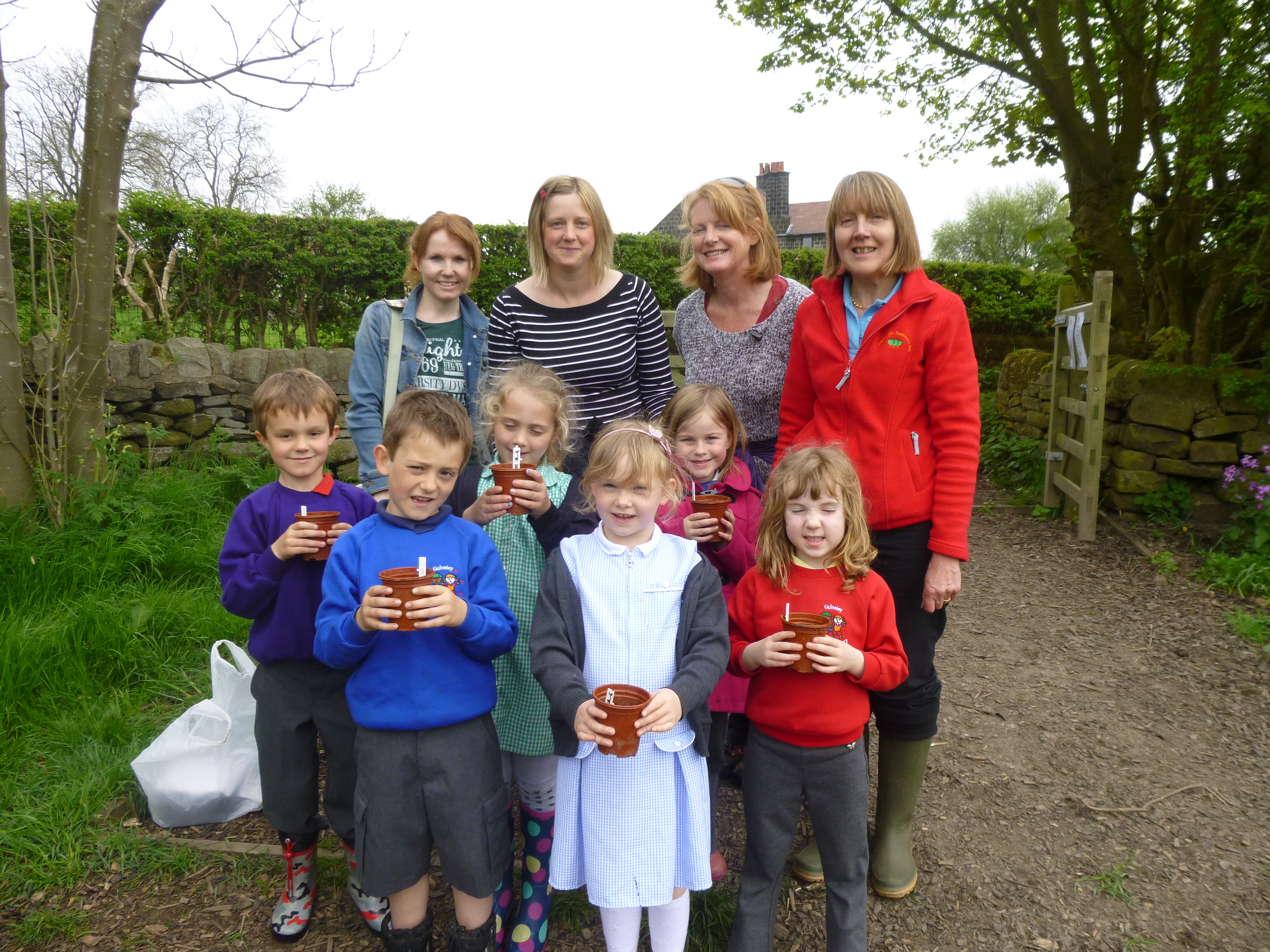
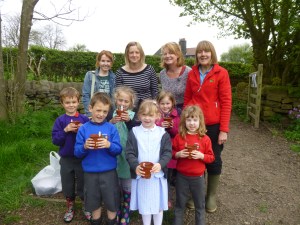
The Poppy Planting Team

The Poppy Planting Team

As part of Aireborough’s World War I commemorations, Parkinson’s Park have been sowing poppies.  The idea is for the poppies to be in bloom on 4th August, when a whole host of events and special features are due to start as a means to recognize the sacrifice and say ‘thank you’ to all the local people who took part in the First Wold War,  in whatever way.

On the morning of Wednesday 30th April  Chris Parapia joined in with Oxford Road Pre School Playgroup  to sow wildflower and poppy seeds at the play area in front of the playgroup building.

In the afternoon six pupils from Guiseley Infants School and their teachers, Daisy, Matilda, Oliver,Jake Evie and Harriet and their teachers Janet Munnings and Helen Gastel,  walked up to the Park,  and worked very hard sowing seeds in the newly extended wildflower area by the Farmgate; helped by Betty, Josie, Chris and Barbara from the Friends.

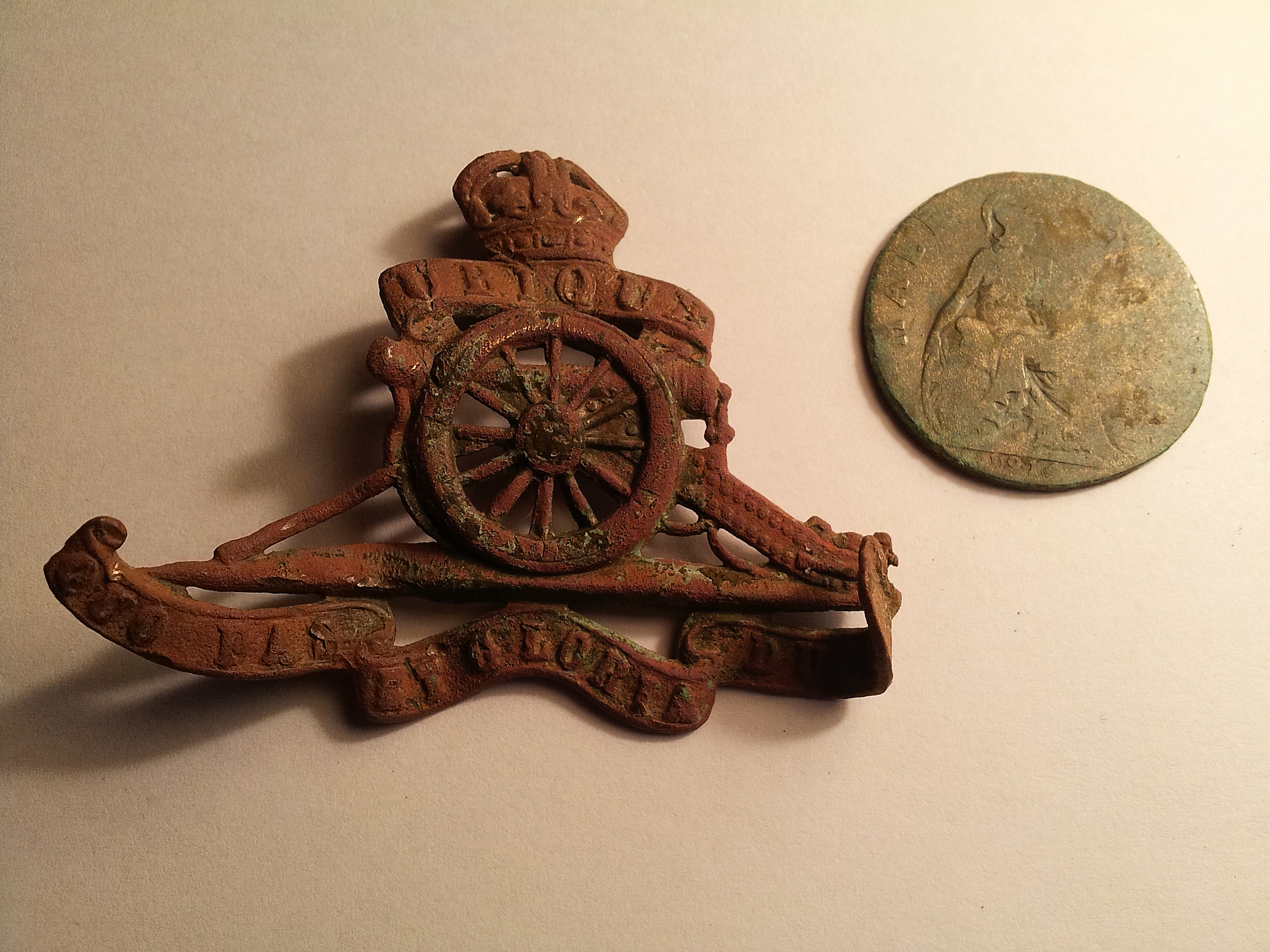
Brass Cap Badge from The Royal Artillery & 1914 Half-Penny recently found in the Park.

Brass Cap Badge from The Royal Artillery & 1914 Half-Penny recently found in the Park.

The poppies should give colour on August 4th, when there will be a wreath laying ceremony at the cross in Guiseley at 11am followed by flowers placed on the war graves in St Oswald’s cemetery: Guiseley Brass Band will be playing  music from 1914, from 10.30am.  Later in the evening the Guiseley churches will be holding an evening reflection.  Nationally there is to be a ‘blackout’ from 11pm when people will be asked to turn off their lights, and light a British Legion candle.  Special  WWI candles will be available from The Royal British Legion’s partner,  Marks & Spencer’s from early July,
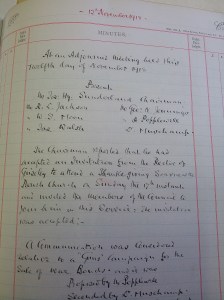
Entry from Guiseley Town Council Minutes of 12th November 1918.

Entry from Guiseley Town Council Minutes of 12th November 1918.

The Aireborough Commemmorations are designed to bring together in remembrance the townships of Yeadon, Guiseley and Rawdon – not forgetting Hawksworth and High Royds, whose families were all part of the Parish of Guiseley.  The events will last from 2014 until 2018 and compliment national events.    The idea was started by Stuart Andrew MP, last year,  after discussions with the local Royal British Legion.  The organizing committee, of which Parkinson’s Park is a member, along with Guiseley in Bloom,  Guiseley Carnival, Rawdon Parish Council, local churches, and the British Legion,  is chaired by WWI historian Cllr John Davies from Rawdon Parish Council.   Anyone who wants to be part of the committee,  or has an event they are organizing that could link into the WWI programme, should contact John on 0113 250 4403.



AGM Presentation – All Our Stories, History of Parkinson’s Park

Attached is the presentation given at the AGM about showing the results of our All Our Stories research about the History of Parkison’s Park.  This is just the tip of the wealth of data we now have,  and which will be going into leaflets, information boards, and eventually a book – maybe.    We can arrange to talk about our work to local groups,  just email us on parkinsonspark@gmail.com

Marking the Start of the World War One Centenary

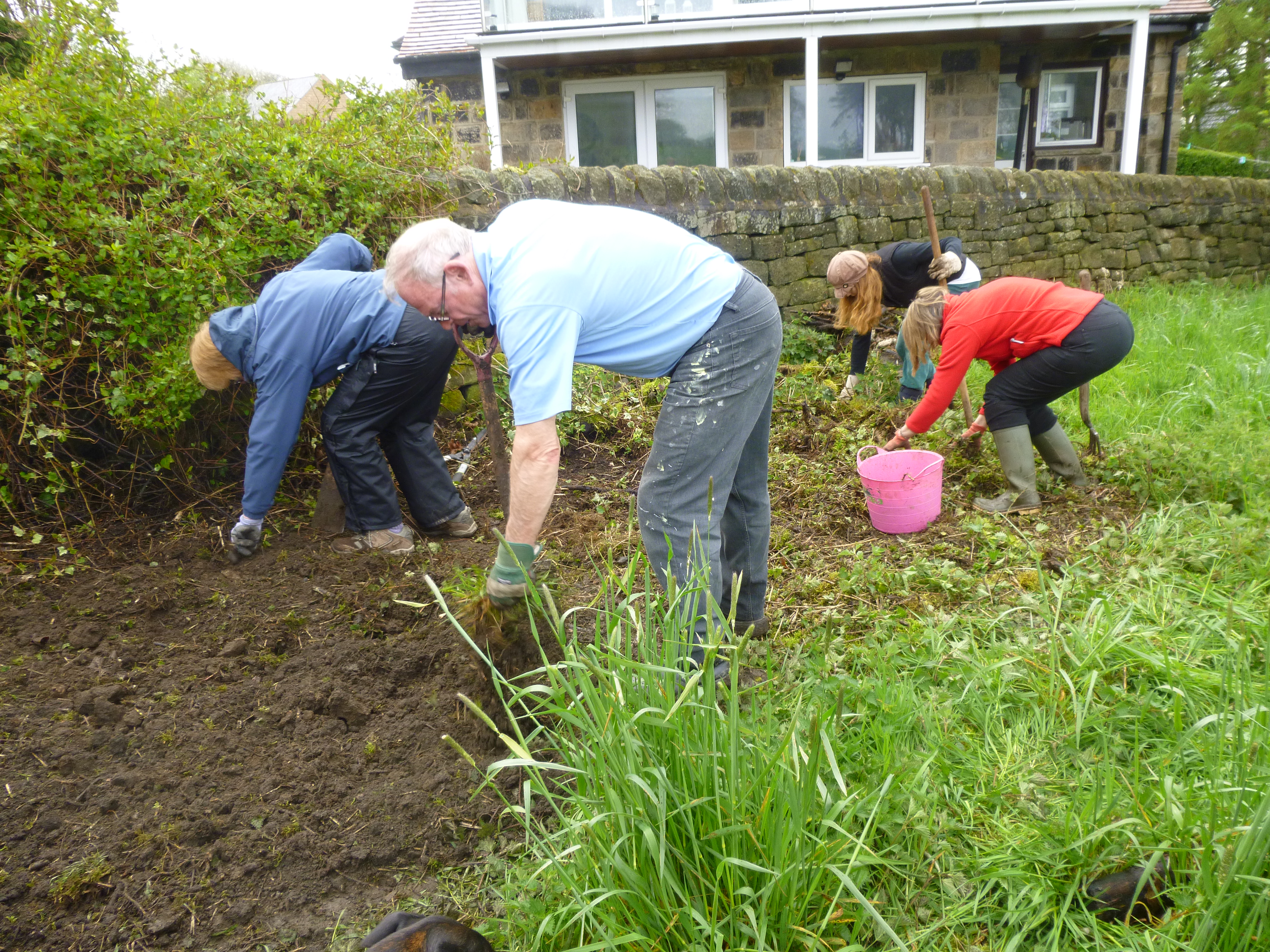
Friends preparing the wildflower and rememberance poppy area.

Friends preparing the wildflower and rememberance poppy area.

On Saturday 26th April 2014,  seven Friends of Parkinson’s Park came to help dig over and prepare the Wildflower area for planting and poppy-seed sowing – as part of this year’s World War One Centenary.

The area is due to be planted by school children from Oxford Road Pre School Playgroup in the morning and Oxford Road Infants, in the afternoon of Wednesday 30th April.  The  wildflower seeds have been donated by an organisation called “Grow Wild”,  and the poppy seeds donated by The Royal British Legion via Guiseley in Bloom.

It was definitely a case of many hands make light digging,  and thanks are extended to Chris Parapia, Barbara Winfield, Richard and Gail Lamb, Sue Jackson, Josie Brooks,  and Anne a new member from the Bellway Estate, whom we were very pleased to welcome; along with Daniel, aged 8, who came along to help out later in the day.

The 30th April will see a number of local community groups taking part in poppy-seed planting to  mark the start of rememberance of those who between 1914 – 1918 gave up so much to make a stand against tyranny in Europe.   Aireborough,  will be putting on a number of events over the coming months, and a WW I committee has been formed to co-ordinate activity – more of this in a later post.

Lantern Parade – Marking the Route

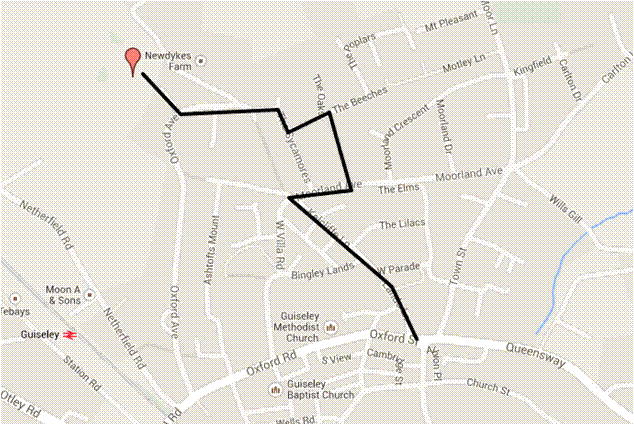
Parade Route

Parade Route

Here is the route the Lantern Parade will follow on Sunday 15th December, setting off at 4pm from the Park (red marker) – see earlier item for full details.

We are also pleased to announced that Cecil Green Arts, from Bradford (who organized the Lister Park parade earlier this year) have kindly lent us one of their large lanterns, and will be providing a drummer to help with the rhythm of the parade.

Meanwhile, Sian Cartwright will be baking the mince pies and buns, and Richard Slatcher from The Station Pub, will be mulling the drink, both to be consumed at the memorial cross whilst Guiseley Brass Band plays carols.   Richard has also reminded us that the Christmas Market and Craft Fair complete with hog roast,  will be on at the Station from 9am to 1.30pm on Sunday 15th.

Lastly, some residents on the parade route, have offered to light their gardens and houses with lights and lanterns – this will certainly add to the atmosphere: thank you

Lastly,  can we remind you to RSVP to parkinsonspark@gmail.com, so that we can gauge numbers.

Lantern Parade and Carols – 15th December 2013

Lantern1

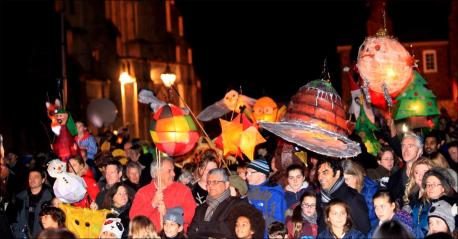
Lantern Parade at Ashton. Source Ashton Market

The Friends of Parkinson’s Park  invite residents to come and take part in Guiseley’s first community Lantern Parade, Sunday 15th December 2013, between 4 – 5.30pm.  This will be supported by  Red Nose Community Cash, and be part of the Heritage Lottery Fund All Our Stories project.

amesbury-lantern-parade-03

Lantern Parade at Stonehenge

Lantern parades are becoming popular in a number of towns and cities across Britain during late Autumn, and Winter.  These hark back to older customs around Samhain and Yule, that were built into the Christian Festivals of All Saints/Souls and Advent/Christmas; the purpose of all being to encourage light, warmth and salvation to return again to nourish crops and people – whilst a little ‘misrule’ is in order.

So, to start off what we hope will become a new Guiseley tradition,  meet up near the top copse in Parkinson’s Park at the decorated tree stump from around 3.45pm, and then we will parade with lanterns down to Town Gate and the cross.  There, we will be met by Guiseley Brass Band, who will play a number of carols for us to sing along too, whilst mulled drink, mince pies and Christmas buns will be given out.

Winchester Daily Echo

Advent Lantern Parade at Winchester. Source; Daily Echo

Please,  bring your own lantern to create a display and light the way (ideas for lantern making below), and if children (or adults) would like to dress up to get in the Christmas spirit, it all adds to the ‘misrule’.   All children need to be accompanied by an adult.  The Park can also be a little muddy if it has been raining, so wellies or study shoes would also be appropriate.

If you could email us on parkinsonspark@gmail.com to let us know you are coming and how many people, that would be useful, to help us with planning.  If the weather is wet or very snowy on the day the event will not go ahead,  please see this website for details of cancellation.  Also, please email us if you would like to help decorate the Park with lights on the 15th, and could even lend some outside lights to make a display.  Come and help make a new Guiseley custom for old and new residents, for us to pass on to future generations.

Find 10 lantern making ideas here.

There are also lantern making video’s on YouTube.

All Our Stories – Parkinson’s Park Puts Digital Record on History Pin

imagesAs part of our heritage lottery fund (HLF) grant, we have to provide a permanent digital record of our All Our Stories project.  The chosen HLF media for doing this is History Pin, and we have just finished setting up the Parkinson’s Park initial digital record.  You can find it here along with other All Our Stories projects.

When you go into the record, or channel as History Pin call it,  and scroll down you will come to tabs with map, list and tours on it.

List view – shows all the photographs we have uploaded to the record, and you can click on each to read the commentary about what we have found out – we will be adding to this as the project evolves.   You can also add your own commentary to the digital record . Continue reading

All Our Stories – Out of the Mists of Time

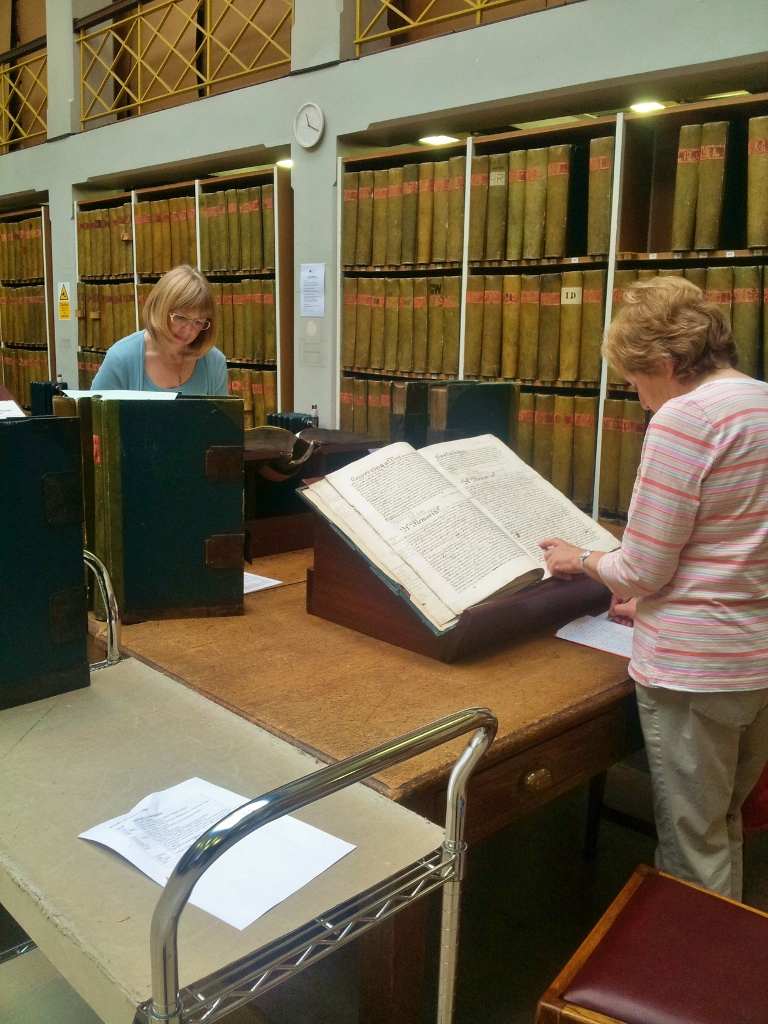
Barbara Winfield and Jennifer Kirkby at Wakefield Deeds Archives

Barbara Winfield and Jennifer Kirkby at Wakefield Deeds Archives

The purpose of the All Our Stories, HLF grant, is to tell the story of the ‘ordinary’ people, who have used the Park land down the ages.

We knew the recent history,  from when the Parkinson brothers acquiring the land in the late 1930’s for a community facility.  We  then established that Kelcliffe House used to be a tannery,  as far back as the 17th century. Then, in August, we got the geophysics report confirming that the Park evidenced many historic phases of agriculture – the earliest possibly being Early Medieval (700AD to 1,000AD); which would be fascinating, as the Guiseley area was laid waste during the Harrying of the North in 1070: which is why it doesn’t appear in the Domesday book of 1086 – there was nothing of value to record.

So, we have spent the past months filling in the intervening centuries;beavering away in various archives putting together scraps of information from tithe books, land deeds, manor court records, old newspapers and family history sources. Amongst our finds has been a lovely little map of Guiseley glebe lands from 1724, with hand drawings and the location of Celclif (now the north part of the Belway estate is) which is Continue reading